Philippines Go-Bag Checklist: What Two September 20 Guides Say to Pack
TL;DR: Pack a waterproof go-bag anyone in the house can lift with drinking water, 3 days of ready-to-eat food, first aid, light, power, whistle, radio, hygiene, cash in small notes, and IDs and vital papers in a sealed pouch.
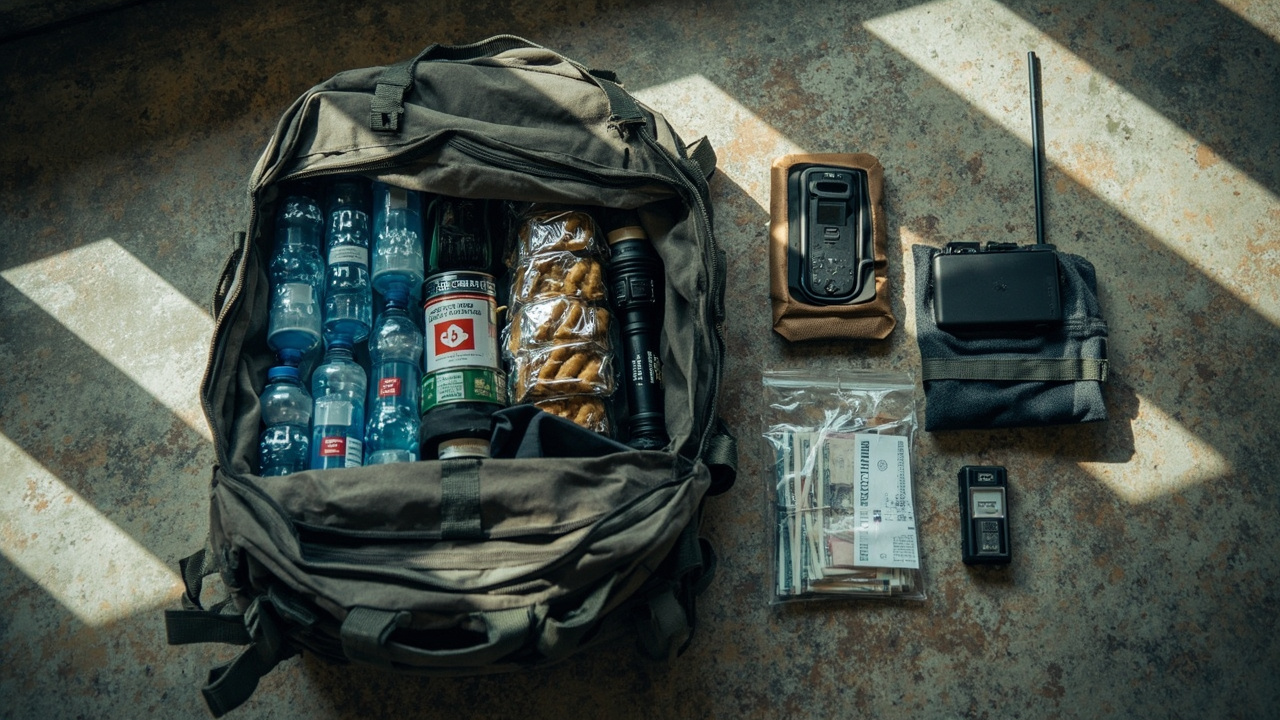
Two Philippines-focused preparedness guides published on September 20, 2026 lay out the same core loadout for households facing typhoon, flood, earthquake and evacuation orders. According to "Go bag checklist for the Philippines: what to pack," the base list is UNICEF Philippines' Emergency Go-Bag checklist, presented with 29 items in four groups in a waterproof bag kept where it can be grabbed on the way out. According to "Typhoon Preparedness for Filipino Households (2026)" by Vic Gonzales III, NDRRMC and Philippine Red Cross guidance calls for a minimum 72 hours of self-sufficiency, with water, food for 3 days, documents, medicine, light, radio, power and cash.
Why this checklist matters on September 20
September is peak storm season in the Philippines, and both September 20 guides frame preparation as work done during calm periods. According to "Typhoon Preparedness for Filipino Households (2026)," the official term for the calm period between storms is "peace time," and it is described as the only time preparation can be done properly. According to "Go bag checklist for the Philippines: what to pack," the bag should sit somewhere it can be grabbed on the way out and should be light enough for anyone in the house to lift.
The same household guide links packing to warning time. According to "Typhoon Preparedness for Filipino Households (2026)," the PAGASA Tropical Cyclone Wind Signal system in place since March 2022 gives 36 hours of warning for Signal 1, 24 hours for Signal 2, 18 hours for Signal 3, and 12 hours for Signals 4 and 5. Wind speeds listed are 39 to 61 km/h for Signal 1, 62 to 88 km/h for Signal 2, 89 to 117 km/h for Signal 3, 118 to 184 km/h for Signal 4, and 185 km/h or higher for Signal 5. The guide states that wind signals measure expected wind speed and nothing else, and do not describe rainfall or flood risk.
For rain and flood risk, the same guide points to PAGASA's separate color-coded rainfall warnings, described as Yellow for flooding possible, Orange for flooding threatening, and Red for severe flooding expected with action now. It directs readers to check pagasa.dost.gov.ph or PAGASA's official social accounts for live signal and rainfall updates.
Water, food and medicine: the 72-hour base
Both guides start with drinking water and ready-to-eat food that will not spoil.
According to "Go bag checklist for the Philippines: what to pack," tap water can be cut off or turn unsafe after a disaster, and the Department of Health says to drink only from a safe and reliable source. According to "Typhoon Preparedness for Filipino Households (2026)," households should pack 3 liters per person per day, closer to 4 liters if water will also be needed for washing, described as the single heaviest and most-often-underpacked item.
For food, the UNICEF-based checklist calls for ready-to-eat food that will not spoil, with easy-to-serve food enough for three days as stated by the Office of Civil Defense. Examples given are crackers, biscuits and canned goods. The same page notes that if cans are packed, the PHIVOLCS kit adds a can opener. The household typhoon guide similarly lists non-perishable food for 3 days, including canned goods, biscuits, and instant noodles if there will be a way to boil water.
Medicine is grouped with food and water in the 29-item list. According to "Go bag checklist for the Philippines: what to pack," the list includes medicine for fever, cough, colds, diarrhoea and anything else the household takes, plus a thermometer and vitamins and baby medicine as its own item. The page notes Department of Health warning that floods spread water-borne diseases, and that if anyone shows a sign of infection the Department of Health says to see a doctor or go to the nearest health facility at once. The typhoon household guide lists prescription medicines plus a basic first aid kit in the same category.
The first aid kit contents are specified in the UNICEF-based list as alcohol, band-aids, antiseptics, bandages and tweezers. The page also references a PHIVOLCS school kit list further down the page for additional detail.
Tools, light, power and signaling
The 10 items highlighted for households that pack nothing else include a torch, a charged power bank, and a whistle for every person including children, according to "Go bag checklist for the Philippines: what to pack."
The torch is listed as a torch, crank or battery type. The page notes that power can stay off after the storm has passed and that a crank torch can be charged by hand. The household typhoon guide lists a flashlight with spare batteries, with the explanation not to rely only on a phone that will need to be conserved.
Power banks appear in both guides. The UNICEF-based list specifies a charged power bank. The household guide specifies a power bank, fully charged. The UNICEF-based page describes the phone as the radio, the map and the way family finds the household.
Radios are listed because mobile networks can fail. According to "Go bag checklist for the Philippines: what to pack," PHIVOLCS says to keep updated on instructions from a battery-operated radio. According to "Typhoon Preparedness for Filipino Households (2026)," households should pack a battery-powered or hand-crank radio, noting that when cell networks go down FM radio keeps working and is how PAGASA and local government updates can be received.
Whistles are personal issue, not shared. According to "Go bag checklist for the Philippines: what to pack," UNICEF says one whistle for every member of the family, children included. The page also lists a portable radio, candles and matches as backup to the torch, a raincoat, rope, a blanket, notebook and pencil, a written list of emergency numbers including barangay and local government unit contacts, and a toy or comfort object for each child. For candles, it notes the Bureau of Fire Protection says to keep an eye on every lit candle and suggests solar lights or lamps over frequent candle use. For the notebook, it notes a pencil writes when wet and needs no battery.
Hygiene, clothing and shelter comfort
Toiletries form the third group in the 29-item checklist.
According to "Go bag checklist for the Philippines: what to pack," the toiletries group includes antibacterial soap, toothbrush and toothpaste, spare clothes with one change per person packed dry, mosquito repellent, menstrual pads, nappies and wet wipes for babies, and a COVID-19 safety kit. The page does not specify what goes in the COVID-19 safety kit. For ashfall, it notes UNICEF says to have goggles and a thick face mask for each person.
Hygiene links are tied to Department of Health advice quoted on the page. It states the Department of Health says to wash hands before and after eating and after using the toilet. It states the Department of Health says more stagnant water means more mosquitoes and more dengue, and that repellents help. The household typhoon guide does not list full toiletries but frames documents, water and food as the items people most regret skipping because replacement after a flood is a months-long ordeal.
Clothing advice is minimal and practical. The UNICEF-based page lists spare clothes and a raincoat, noting Department of Health typhoon advice to keep dry and warm. It also lists rope for tying a tarpaulin, hauling a bag or marking a route, and a blanket without further specification.
Documents, cash and emergency numbers
Documents and cash form the fourth group.
According to "Go bag checklist for the Philippines: what to pack," the documents and cash group includes cash in small notes, an ATM card or passbook, government-issued IDs, an ID card showing blood type and an emergency contact, and passports, birth and marriage certificates, land and insurance papers, and medical records. It directs households to keep papers dry in a sealed plastic bag inside the waterproof bag. It notes card terminals and ATMs need power to work as the reason for small notes.
According to "Typhoon Preparedness for Filipino Households (2026)," documents should go in waterproof pouches and include IDs, birth certificates, land titles and insurance papers. It lists cash in small bills with the explanation that ATMs and card terminals fail with the power. Both guides therefore place papers and small-denomination cash together as the administrative core of the bag.
Emergency numbers are packed on paper. According to "Go bag checklist for the Philippines: what to pack," the list should be written and include barangay and local government contacts, because a dead phone takes contacts with it. According to "Typhoon Preparedness for Filipino Households (2026)," numbers should be saved in the phone now and written on paper in the go-bag in case the phone dies.
The household guide lists 911 as the national emergency hotline under NDRRMC, described as 24/7 and confirmed via the official government hotline directory. It lists 143 for the Philippine Red Cross as a confirmed 24/7 hotline, 160 for the Bureau of Fire Protection, 117 for the Philippine National Police emergency hotline, and 16211 for Meralco for downed power lines or the local electric utility equivalent. It also lists pagasa.dost.gov.ph and PAGASA's official social accounts for live updates.
What to do when evacuation is ordered
Packing is linked to action on wind signal and barangay instruction.
According to "Typhoon Preparedness for Filipino Households (2026)," households should find out before a storm which specific evacuation center serves their barangay and how to get there on foot if roads are flooded or impassable, by asking at the barangay hall. It advises agreeing on a family meeting point and communication plan including one out-of-area relative, and texting rather than calling during a disaster because SMS gets through congested networks more reliably than voice.
For Signal 1 to 2, the same guide advises staying indoors, keeping away from windows and glass, avoiding unnecessary travel, checking PAGASA updates hourly, and securing or bringing in anything outside that could become a projectile. For Signal 3 to 5, it advises evacuating immediately when the local government or barangay orders it and not waiting for flooding to start. Before leaving, it advises turning off electricity, shutting the gas tank and locking doors.
During the storm, the guide advises not going outside during the eye of the storm, never attempting to cross flooded roads on foot or by vehicle, moving to the highest point of the building if trapped by rising water, and calling 911 or signaling for help.
What this means for a practical loadout
For a bug-out bag, the overlap between the two September 20 guides points to a compact, liftable waterproof pack built around 72 hours.
Water weight drives bag size: 3 liters per person per day in the household guide means a two-person 3-day supply alone is 18 liters before food and gear. Food stays to crackers, biscuits, canned goods and, where boiling is possible, instant noodles, with a can opener if cans are included. Light and communications stay redundant with a crank or battery torch, spare batteries, a charged power bank, a battery or crank radio, and a paper number list including barangay contacts plus 911, 143, 160, 117 and the power utility.
Signaling and papers stay personal: one whistle per person including children, one comfort object per child where relevant, government IDs plus blood-type and emergency-contact card, and vital certificates and medical records sealed dry. Cash stays in small notes alongside an ATM card or passbook. Hygiene stays to soap, toothbrush and toothpaste, one dry change per person, repellent, menstrual pads where needed, nappies and wipes where needed, and goggles plus thick masks where ashfall is a risk.