TL;DR: KLCC’s September 21, 2026 Oregon Ready report showed three Oregonians testing go-bags by caching, biking, and camping, while Boise State’s September 15 preparedness guidance listed what to carry and how often to refresh it.
What the newest reporting found
KLCC’s Oregon Ready: Beyond packing the go bag, published September 21, 2026 at 6:00 AM PDT by Love Cross, asked what happens after a go-bag is packed. The report was part of KLCC’s year-long disaster-preparedness series called Oregon Ready. Cross spoke with three people who moved past checklists. One stored supplies outside a hazard zone. One tested evacuation by bicycle. One group lived from go-bags overnight to expose gaps.
The same week, National Preparedness Month tips: Build a go bag, published September 15, 2026 by Boise State News, framed a go-bag as a portable collection for leaving home on short notice. The university’s Department of Public Safety said the bag should cover essential needs, fit personal circumstances, and remain light enough to carry. It said residents do not need a perfect bag in one afternoon and can start with items already owned.
Together, the two reports connect field trials with a baseline inventory. KLCC documented how weight, transport, storage location, and untested tools changed outcomes. Boise State listed categories to pack, personal additions to consider, and a twice-yearly review cycle.
Cached uphill: supplies without the uphill carry
Katie McNeil lives in Old Town Waldport, according to KLCC. Her house sits within the tsunami inundation zone. She estimated about 15 minutes to reach high ground if a Cascadia event occurred. Friends live up the hill outside the mapped danger area.
McNeil asked a friend named Terry whether she could place a backpack in an overhead space in Terry’s garage. Terry agreed, the KLCC report states. The arrangement let McNeil stage heavier provisions ahead of time rather than hauling them uphill during an evacuation. McNeil noted the climb could involve fallen trees or a slumped road.
McNeil told KLCC the staged bag held essentials plus some comfort items. She said knowing materials waited on high ground brought peace of mind. She described arrival after a traumatic event as still difficult, but less bare because food, gear, and familiar comforts would already be present.
For loadouts, the lesson is placement. A bag kept only at home may not help when home is inside the impact area. A second or forward-positioned pack, held with permission at a trusted location beyond the hazard boundary, reduces carried weight during the most urgent movement phase.
Bike test: an 18-pound pack and flat tires
Susan Palmer lives in Eugene’s Friendly neighborhood, according to KLCC. The area has mature trees and backs against a wooded hillside. Palmer linked those features to danger from fast-moving wildfire and possible evacuation orders. She and her husband questioned whether a car would be usable. She noted two main streets serve as clear exits for many feeder streets.
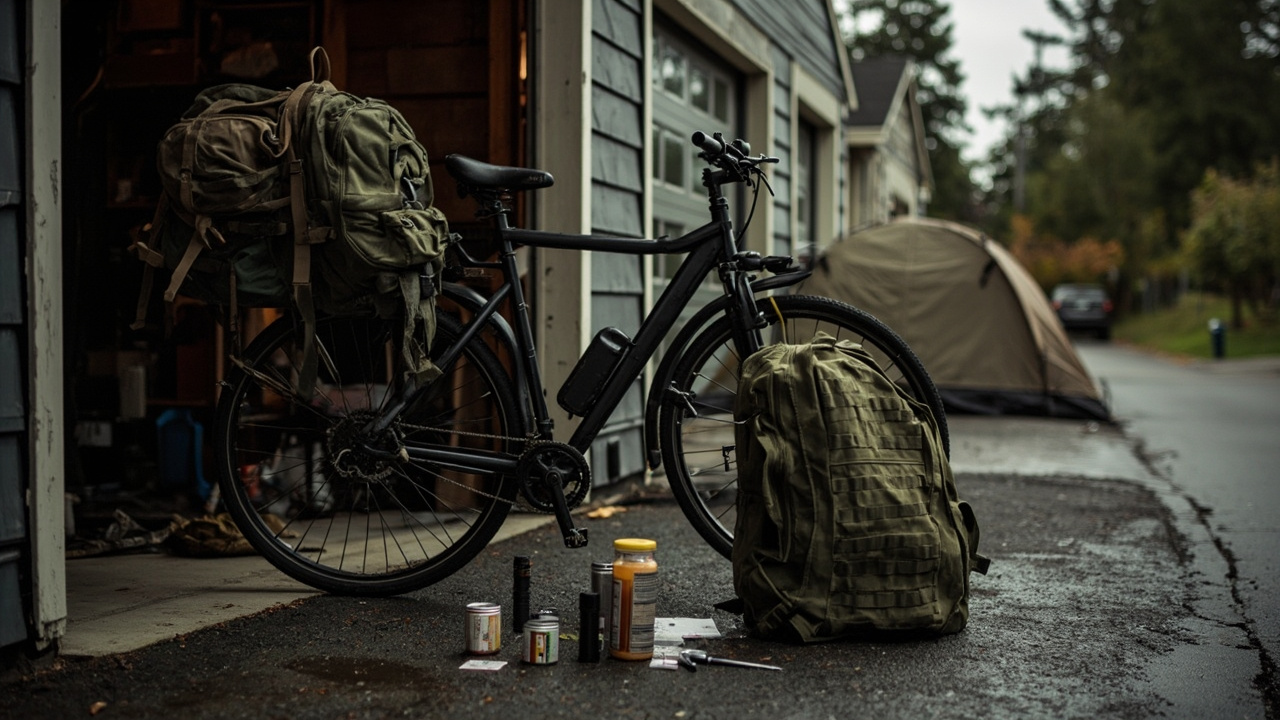
Their go-bags are backpacks, KLCC reported. Palmer considered bicycles as an alternative to driving. When the couple retrieved bikes from a shed, the tires were flat. They restored the bicycles to working condition before any further trial.
Palmer then rode around the block while wearing an 18-pound backpack. She reported she could balance and pedal over that short distance. The exercise answered a specific load question: could she control a bike under pack weight, even briefly.
Inspection prompted additional changes. Palmer found leaked batteries in a flashlight and expired food in a previously stocked bag. She described readiness as ongoing rather than finished. She framed the review question as who she is today, what current needs require, and whether the bag reflects that present situation, according to KLCC.
Boise State’s guidance aligns with that audit habit. It advises choosing food that will actually be eaten and checking expiration dates periodically. It advises recharging a portable power bank, replacing expired food and medicine, updating documents, and changing clothing as seasons or needs change.
Overnight trial: tent, go-bag, and missing tools
Lisa Bangiter helped organize a 24-hour camping trip for her church, KLCC reported. Participants could bring a tent plus their go-bags. The purpose was to determine whether packed plans would function during use.
Bangiter said bags often sit unused after packing. She recalled her son’s routine camping trip where several people carried canned food but only he carried a can opener. That episode prompted her to question assumed readiness.
During the church overnighter, participants cooked, slept, and operated gear solely from bag contents. Even preparedness leaders found shortcomings, according to KLCC. One example involved Sternos without equipment to hold a pot above the flame without smothering it. The group learned the mismatch only by attempting to heat food.
At the end of the campout, attendees requested another session, KLCC reported. They wanted to improve bags at home and repeat the exercise in six months. Bangiter’s assessment was that a checklist alone does not prove function; only use reveals whether items work together or are absent.
The account supports live testing as a distinct step after inventory. A bag can contain stove fuel yet lack a stand. It can contain cans yet lack an opener. An overnight stay near home exposes those pairings without an actual evacuation.
What Boise State says belongs inside
Boise State’s Department of Public Safety listed starter categories for National Preparedness Month. The suggested contents included water and ready-to-eat food that resists spoilage, a flashlight with extra batteries, a charged portable power bank with cables, and a basic first aid kit. The list also included necessary medications with prescription copies, a clothing change with sturdy shoes and weather-appropriate layers, hygiene supplies, identification and insurance copies with emergency contacts and other records, and a small amount of cash in smaller bills.
The university advised carrying as much water as reasonably possible while keeping additional emergency water at home. It said anyone packing a portable filter or treatment product should follow that product’s directions carefully because not every product makes every source safe. It also advised selecting foods the household will eat.
Personalization formed a second layer. Boise State named spare glasses, hearing-aid batteries, mobility-device supplies, communication cards, menstrual products, infant supplies, and backup power for medical equipment. It also named supplies for service animals or pets. For stress, it suggested a family photograph, book, deck of cards, or another small comfort item.
Storage and upkeep formed the third layer. The guidance said to keep the bag near an exit or in a designated closet and ensure household members know its location. It recommended review twice per year.
Practical loadout consequence
The combined reporting points to three loadout adjustments supported directly by the cited cases and checklist.
First, separate carry weight from cached weight where geography allows. McNeil’s uphill cache shows that permission-based storage outside a tsunami zone can hold bulk goods. The bag worn during movement can then stay light enough for climbing or debris. Boise State’s standard still calls for portable water, food, light, power, documents, medicine, clothing, hygiene, and cash in the carried bag.
Second, match the pack to the vehicle that may actually move it. Palmer’s flat tires and short ride with an 18-pound load show that a bicycle plan requires inflated tires, working brakes, and a balance check under weight. Her wildfire concern and limited street exits explain why bikes entered the plan. A household relying on cars should still confirm that backpack straps, weight distribution, and mounting do not prevent pedaling or walking if roads clog.
Third, test paired tools before need. Bangiter’s Sterno-and-pot gap and the earlier can-and-opener gap show that single items fail without mates. A trial night with only a tent and go-bag forces those pairings into view. Boise State’s reminder to follow treatment-device directions and to rotate food, medicine, power, documents, and seasonal clothing gives the maintenance rhythm: twice yearly, plus after any trial reveals a missing mate.
Sources referenced
- National Preparedness Month tips: Build a go bag - Boise State News (https://www.boisestate.edu/news/2026/09/15/national-preparedness-month-tips-build-a-go-bag/)