TL;DR: Maui County's Sept. 26-28 Olowalu brush-fire evacuation proved shelters provide space, charging and internet — not supplies — so evacuees had to arrive with bedding, food, water, medications, charging cables and crated pets.
Fast-moving fire forced a real evacuation test
A brush fire reported at approximately 1:57 p.m. on Saturday, Sept. 26, near Olowalu Village in West Maui forced an immediate evacuation that tested go-bag planning under live conditions, according to Maui County alerts republished by Forth / Maui County Alerts (MEMA).
The Maui Emergency Management Agency issued an evacuation order at 2:39 p.m. for Olowalu Village from Luawai Street to Ehehene Street, with emergency sirens sounded at approximately 2:40 p.m., the county update states.
The fire was estimated at more than 100 acres and was 70% contained as of 8 a.m. on Sept. 27, with no structures reported as impacted at that time. By the morning of Sept. 28, mandatory evacuation orders were lifted at 5:45 a.m. after the fire reached 95% containment, according to the County of Maui Alert Center.
Hawai'i Public Radio reported that the fire burned more than 100 acres over the weekend, that no structural damage or injuries were reported, and that residents were allowed to return Sept. 28 but advised to use caution for smoke impacts while crews remained on scene.
Ground resources included a Lahaina engine, mini-pumper and tanker, a Napili mini-pumper, a Wailuku mini-pumper and two emergency callback engine crews, plus two private dozers, two private tankers, two state Department of Land and Natural Resources Division of Forestry and Wildlife tankers and three Type 3 DOFAW engines, according to the Sept. 27 county update. Two helicopters were on standby but strong winds prevented safe flights unless needed for an emergency.
The timing mattered for preparedness. The National Weather Service had issued a High Wind Warning for portions of Maui County until 6 p.m. Sunday, Sept. 27, and Hurricane Nolo was passing south of the Hawaiian Islands. Hawai'i Public Radio reported winds over 60 miles an hour on Sunday prevented helicopters from safely dropping water, leaving ground crews to continue work through the night.
Two sites opened — with different levels of support
The county opened two different types of evacuation sites on Sept. 26, a distinction that directly affected what a bug-out bag needed to cover.
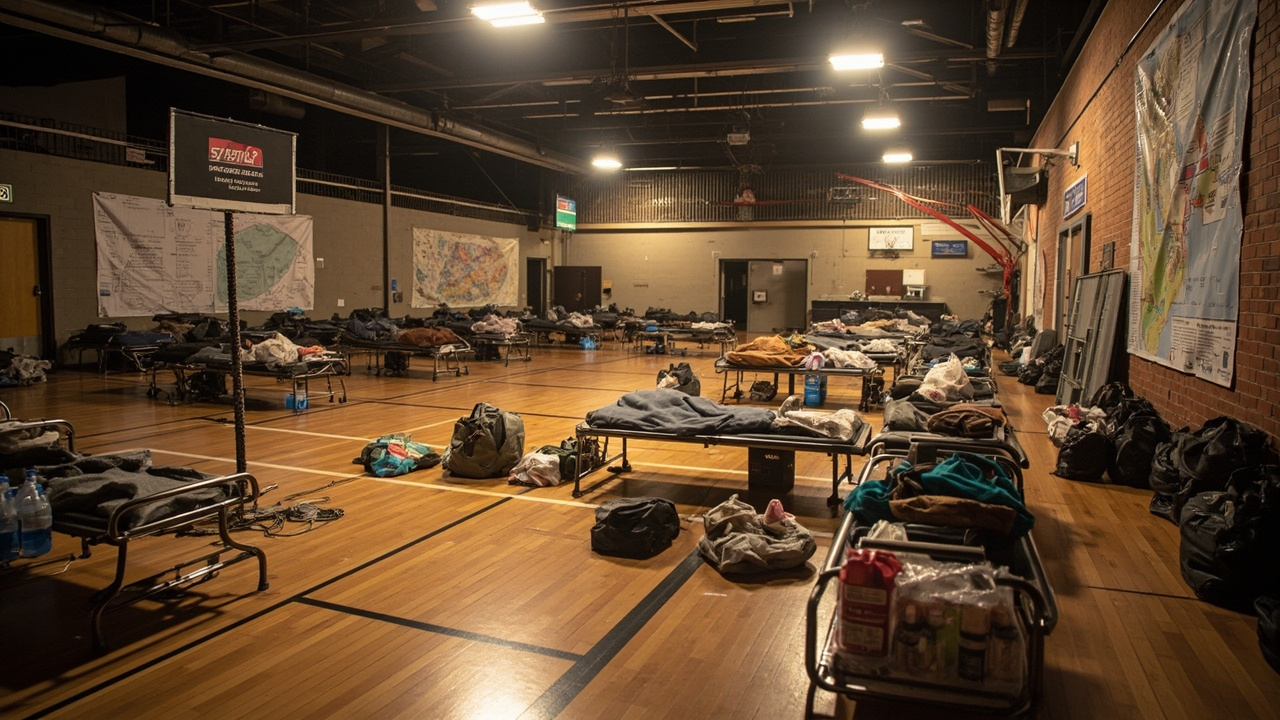
The West Maui site at Lahaina Civic Center Gym, 1840 Honoapi'ilani Highway, opened at 3:45 p.m. as a temporary evacuation point and then transitioned to an emergency shelter for residents evacuating Olowalu Village and for those affected by power outages in West Maui, according to a County of Maui notice distributed via EIN Presswire.
The South Maui site at South Maui Community Park and Gym, 1501 Liloa Drive in Kihei, opened at 4:30 p.m. and remained a temporary evacuation point, or TEP.
The difference was explicit in county messaging. An emergency shelter provides a safe place for displaced residents and offers basic amenities. A TEP provides a safe gathering area but does not have the supplies and amenities of a regular emergency shelter, the county said.
That distinction was reinforced on Sept. 27. The South Maui TEP closed at 3 p.m. that day after having no occupants that morning following a high of 66 occupants during the response, while the Lahaina emergency shelter remained open with 12 occupants as of 1 p.m., according to a Maui County Alerts update. The Lahaina site then closed at 4 p.m. on Sept. 28 after power restoration was nearly complete.
For go-bag owners, the operational takeaway is direct: a TEP assignment means no cots, no food and no water are provided on site. Even the full shelter did not promise those consumables during this incident.
What evacuees were told to bring
Across all three county updates, the packing list for both the shelter and the TEP stayed consistent and self-supplied.
Residents heading to the Lahaina emergency shelter were told to bring their own bedding, food, drinking water, medications, charging cables and other essential items, with pets allowed but required to be in crates.
Those evacuating to a TEP were told to bring bedding, food and drinking water, essential supplies and medications, with the same crate requirement for pets. A separate Sept. 27 county notice about the temporary service site in Pukalani repeated the formula: bring food, drinking water, medications, charging cables and other essential items, with pets in crates.
Hawai'i Public Radio confirmed the same pattern, reporting that the Lahaina Civic Center Gym opened with charging stations for personal electronics and later had Starlink satellite internet connectivity available.
The County of Maui Alert Center similarly stated that charging stations and Starlink satellite internet connectivity had been available at the Lahaina site for residents affected by power outages.
Operations, available amenities and how long shelters remained open were assessed as conditions evolved and depended on fire conditions and community impacts, the county said. In other words, evacuees could not count on a fixed resupply timeline.
The crate rule deserves specific attention from pet owners building a vehicle kit. Both shelter and TEP notices required crates, not just leashes or carriers improvised at arrival. A folding crate stored with the family evacuation load was therefore an entry requirement, not an optional comfort item.
Power outage expanded the shelter mission
The Olowalu fire response quickly overlapped with a wider West Maui power outage, which changed who needed the shelter and why backup power mattered.
Hawaiian Electric deenergized power lines from Ukumehame to Lahainaluna Road surrounding the brush fire, leaving about 740 customers without power Saturday night, Hawai'i Public Radio reported. The utility said that outage was not a Public Safety Power Shutoff.
Early Sunday morning, severe weather caused additional outages from Lahaina to Kapalua. More than 12,000 Maui customers were without power across the island on Sunday, including Haiku and Upcountry areas, according to the same reporting. About 10,000 impacted customers in West Maui were advised they would likely be without power until at least Monday afternoon.
The county's Sept. 28 closure notice said Hawaiian Electric reported crews had restored service to nearly all 10,000 customers in West Maui after inspections and repairs to the transmission line serving the area. The weather-related outage had been reported Sunday morning while Maui County was under a High Wind Warning as Hurricane Nolo passed south of the islands.
That sequence explains why charging stations and Starlink connectivity became central shelter amenities rather than extras. Hawai'i Public Radio noted cell phone service was intermittent in West Maui during continuing outages, increasing reliance on centralized charging and satellite internet at the gym.
A related county action underlined the power-driven need. The county opened a temporary service site at the Mayor Hannibal Tavares Community Center meeting room in Pukalani from 4:30 to 10 p.m. on Sept. 27 to support residents affected by outages, offering charging stations and Starlink service. Hawaiian Electric had activated its Public Safety Power Shutoff program in Pukalani because of high winds, dry conditions and increased wildfire risk, affecting about 485 customers, while about 11,350 customers remained without power in West Maui, Haiku and Upcountry due to storm impacts.
Roads and access constrained movement
Evacuation mobility was limited by closures around the fire and wind zone.
The county reported Honoapi'ilani Highway closed from North Kihei Road to Olowalu General Store at 820 Olowalu Village Road, plus local-traffic-only limits from Mile Marker 35 near Honokohau Stream to Waihee School on Kahekili Highway. Motorists were told to avoid the areas and use alternate routes.
Hawai'i Public Radio reported the highway was closed from North Kihei to Olowalu General Store for much of Saturday afternoon and evening, creating backed-up traffic, before both lanes reopened around 10:30 p.m. with caution advised through the affected area.
Residents were directed to leave immediately, evacuate away from the fire area, follow directions from emergency officials and not return until authorities lifted the order. For bug-out planning, the implication is that a vehicle bag needed to support waiting in traffic, rerouting and a possible overnight stay without returning home for forgotten items.
What this means for a practical loadout
This was not a gear review or laboratory test. It was documented field use of personal kits during an actual evacuation, and the county's instructions show where generic packing fails.
First, water and food must be carried, not assumed. Both shelter and TEP notices required evacuees to bring their own food and drinking water. Shelters provided space and safety, not full supplies.
Second, sleep systems must be portable. The repeated instruction to bring bedding means a cot or blanket was not guaranteed. A compact sleeping bag, pad and pillow packed for vehicle evacuation would have met the stated requirement at either site.
Third, medications must travel with the person. County lists placed medications alongside food and water, not as an afterthought. A seven-day pill organizer, prescription list and temperature-sensitive storage would align with the instruction to bring medications and essential supplies.
Fourth, power must be personal plus compatible. Shelters offered charging stations, but residents had to bring charging cables. A phone, cable, compact power bank and hard-copy contact list would allow use of the provided power and Starlink without depending on borrowed accessories.
Fifth, pet readiness must include containment. The crate mandate at every site means pet food alone was insufficient. A collapsible crate, leash, water bowl and vaccination record stored with family bags would satisfy entry rules described by the county.
The occupancy numbers reinforce the point. With a peak of 66 people at the South Maui TEP and 12 occupants at Lahaina on Sept. 27 afternoon, these were small, austere sites — not stocked field kitchens. A loadout built around 72 hours of self-support for each person and pet fits the conditions officials actually described.