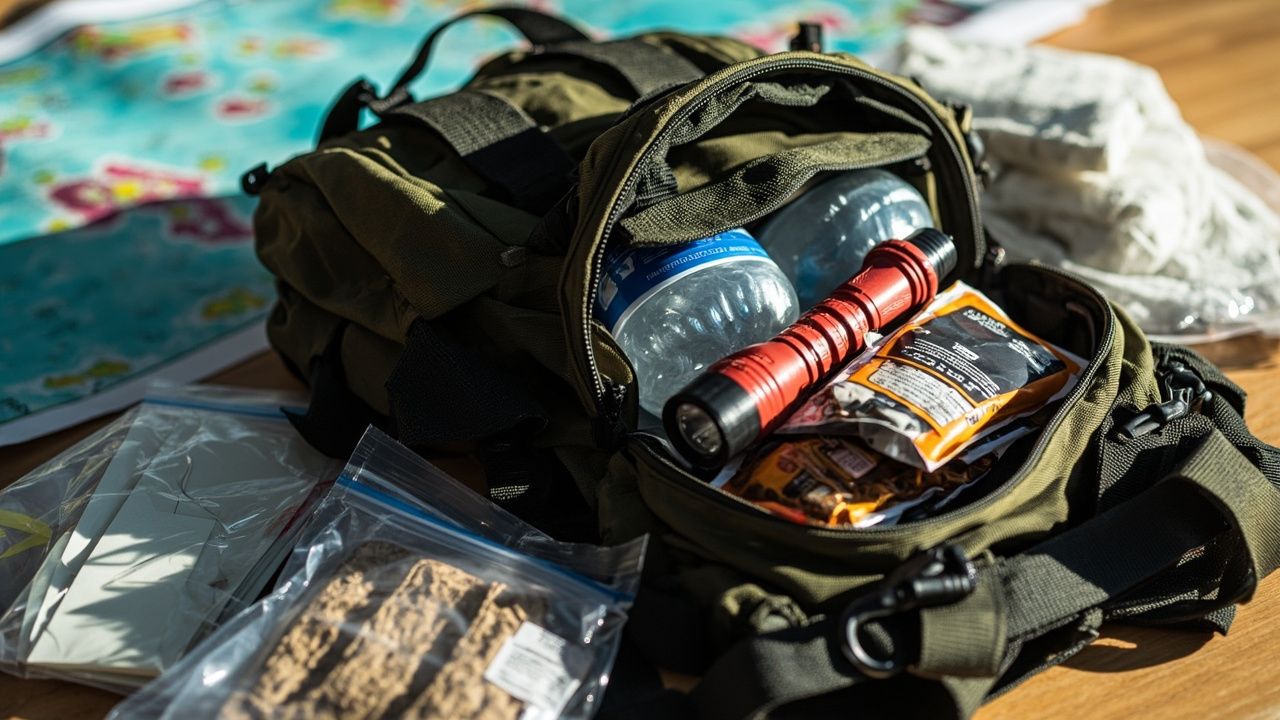
TL;DR: Hawaii emergency officials say a hurricane evacuation go-bag must let you care for yourself and your pets in a refuge area that provides almost no supplies.
Why this checklist was published on Sept. 11, 2026
A reader asked the Honolulu Star-Advertiser's Kokua Line column to list what is supposed to be in a go-bag for hurricane evacuation, explaining that the household already kept a 14-day supply of water, nonperishable food, batteries and other goods to stay at home without power during frequent outages but had not considered fleeing until this hurricane season, according to the Honolulu Star-Advertiser.
The answer, reported by Christine Donnelly in the Honolulu Star-Advertiser on Sept. 11, 2026, states that households should prepare for disasters they can ride out at home and for those they cannot, and that a go-bag contains smaller quantities of many of the same items needed in a separate two-week supply to shelter-in-place.
The column presents Hawai‘i Emergency Management Agency recommendations for each go-bag, with contents placed in resealable plastic bags stored in a sturdy backpack or portable container that can be grabbed and carried out the door to a safer dwelling, according to the Honolulu Star-Advertiser.
The timing followed Hurricane Lowell activity around Hawaii during Labor Day weekend and the following week, when the American Red Cross said Hurricane Lowell was a very strong category four storm which could impact Hawaii with sustained 145 mph winds early next week, according to the American Red Cross.
What HIEMA lists as essential in every go-bag
The Honolulu Star-Advertiser reports the Hawai‘i Emergency Management Agency essential-items list as water, high-energy food like protein bars or jerky, battery-powered or hand-cranked radio, flashlight, extra batteries, required medication and toiletries, first-aid kit, cell phone charger and backup battery, whistle, dust mask, multi-tool, rain jacket and warm clothes, garbage bags and ties, toilet paper and hand sanitizer, and cash.
The same report states the list assumes the evacuee will also be carrying a wallet with ID and a cell phone, and will be wearing eyeglasses or contacts if they use them, according to the Honolulu Star-Advertiser.
The report adds a clothing instruction to wear socks and sturdy shoes during evacuation, according to the Honolulu Star-Advertiser.
For loadout practice, that means the bag itself does not replace worn gear. The wallet, phone, corrective lenses, socks and shoes are carried or worn separately, while the backpack holds consumables and tools in sealed bags for movement to a safer dwelling.
The American Red Cross separately advises evacuees to be able to monitor local weather and news reports even if power goes out, to have a backup battery or another way to charge a cell phone, and to have a battery-powered or hand-crank radio, according to the American Red Cross.
The American Red Cross also advises writing down important phone numbers on a contact card and carrying it, signing up for free emergency alerts from local government, and keeping personal, financial and medical records in a safe place that is easy to access with hard copies or secure backup, according to the American Red Cross.
Other useful items HIEMA recommends
Beyond essentials, the Honolulu Star-Advertiser reports a second Hawai‘i Emergency Management Agency category of other useful items: plastic sheeting or tarp, zip ties, paracord, duct tape, local maps, can opener, water filter and water purification tablets, travel soap and shampoo, toothbrush and toothpaste, lighter or matches, paper and pencil, camp dishes and utensils, paper towels, sanitary wipes, extra eyeglasses, extra shoes and socks, copies of important documents, sleeping mat, and something to pass time in an evacuation center.
The examples given for passing time include a deck of cards or a coloring or activity book if little kids are in the household, according to the Honolulu Star-Advertiser.
The water-filter and water-purification-tablet entry matters for weight planning because refuge-area guidance expects evacuees to bring their own water. A compact filter and tablets supplement carried water without adding the bulk of a separate two-week home supply.
The copies-of-important-documents entry aligns with the American Red Cross guidance to consider keeping a list of medications and dosages on a small card to carry, and to gather critical supplies including food, water and medicine organized into a three-day go-kit and a two-week stay-at-home kit, according to the American Red Cross.
The American Red Cross specifies including a month’s supply of medications and medical supplies if needed, and including items needed for pets or young children, according to the American Red Cross.
Kids, pets, older adults and bag weight
The Honolulu Star-Advertiser reports that households with infants or young toddlers should include diapers, wipes and disposal bags, and that pets will have their own needs such as food, waste bags and a favorite toy.
The report states that each household member capable of carrying their own go-bag should have one, while items for pets and for keiki and kupuna unable to shoulder the burden should fit into the bag of another household member, according to the Honolulu Star-Advertiser.
The report states it is important not to make the bags too large or heavy because speed and efficiency aid safe evacuation, according to the Honolulu Star-Advertiser.
The report advises keeping a go-bag anywhere a person spends a lot of time, such as at home and work, in an easily accessible spot, according to the Honolulu Star-Advertiser.
The American Red Cross advises having a plan to evacuate and a plan to shelter safely at home, with the evacuation plan covering where to go, how to get there and where to stay, according to the American Red Cross.
The practical consequence is one bag per carrier, with dependent loads redistributed rather than stacked as an extra oversized bag, and with duplicate kits staged where time is spent.
Why refuge areas require you to bring your own kit
The Honolulu Star-Advertiser reports that, as HIEMA and county emergency agencies have said, each island opens some level of emergency refuge area before a dangerous storm, but those centers offer few provisions, especially initially, and people who have no better option should come prepared to take care of themselves and their pets.
Hawaii News Now reported on Sept. 7, 2026, that emergency management officials had designated several hurricane refuge areas across O‘ahu and Kaua‘i as Hurricane Lowell approached the state, offering residents a safe place to seek shelter if their homes were not secure.
For Kaua‘i, the County, in partnership with the American Red Cross, identified Kīlauea Neighborhood Center at 2460 Keneke Street in Kīlauea, Kapa‘a Middle School at 4867 Olohena Road in Kapa‘a, Kaua‘i High School Gym at 3577 Lala Road in Līhu‘e, Kalāheo Neighborhood Center at 4480 Papalina Road in Kalāheo, and Waimea Canyon Middle School at 9555 Huakai Road in Waimea, according to Hawaii News Now.
A Sept. 5, 2026 County of Kaua‘i bulletin stated those refuge areas were not open at that time and that updates would be provided if and when they were opened, showing that identification of a site is an announcement of a potential location rather than an open shelter.
Hawaii News Now reported that refuge areas do not provide food, water, bedding, medications, personal caregivers or medical staff, and that anyone going to a refuge area should bring their own disaster-supply go-kit, with household pets welcome but owners required to bring pet food, water and crates or cages.
The County bulletin used the same terms, stating refuge areas do not provide food, water, bedding, medications, personal caregivers or medical staff, and that owners must bring pet food, water and crates or cages.
O‘ahu’s last-resort rule and Lowell operations
For hurricanes in particular, Honolulu’s Department of Emergency Management emphasizes that O‘ahu’s refuge areas are intended as a last resort, with better options possibly including sheltering at work or going to a friend or family member’s well-protected home, according to the Honolulu Star-Advertiser.
The Honolulu Star-Advertiser reports that, although commonly called hurricane shelters, in almost all cases O‘ahu’s facilities do not meet state guidelines for hurricane evacuation shelters and are more accurately described as best available refuge areas that are generally safer than remaining in areas prone to flooding, storm surge or in older homes with wood frames or single-wall construction, according to the DEM website.
The column directs readers to honolulu.gov/dem/hurricane for more information, including a link to a map of identified refuge areas on O‘ahu, according to the Honolulu Star-Advertiser.
During Lowell, Hawaii News Now reported that Nānākuli Elementary would open as a hurricane refuge area Monday at 5 p.m. for residents and visitors needing a safe place during the storm, at Nānākuli Elementary School, 89-778 Haleakala Avenue, Wai‘anae, with pet-friendly status marked yes.
Hawaii News Now reported that residents or visitors seeking shelter there who required transportation could use TheBus routes C or 40, then transfer to Route 403 at Nānākuli Avenue, and that transit fares still applied for those routes.
Hawaii News Now reported that the refuge area was operated in partnership with the American Red Cross, with support from houseless outreach providers and in coordination with Partners In Care, and that those seeking shelter were advised to bring their own food, water, medications and other essential items whenever possible, with pets required to be leashed or in a carrier.
Hawaii News Now quoted Mayor Rick Blangiardi saying, “We are urging people to prepare now and make a plan,” and “Do not wait.”
How to split a go-bag from a 14-day home kit
The distinction emphasized on Sept. 11, 2026 is portability. The home supply covers 14 days without power, while the go-bag covers movement and an initial refuge stay with smaller quantities in a backpack or portable container, according to the Honolulu Star-Advertiser.
The American Red Cross frames the split as a three-day go-kit plus a two-week stay-at-home kit, with the evacuation plan separate from the plan focused on living safely without power, water, gas, phone or internet for a long time, according to the American Red Cross.
Hawaii News Now reported that the public is reminded that refuge areas are evacuation options of last resort, and that in many cases sheltering in place may be a good option particularly if the home or structure is sound or hardened and located outside hazardous flood and storm-surge areas.
The American Red Cross advises being prepared to evacuate immediately if local officials advise, bringing the go-kit and pets, following evacuation routes without taking shortcuts that may be blocked, never walking, swimming or driving through floodwaters, taking shelter in an interior room away from glass windows and doors if officials do not recommend evacuating, moving to higher ground before flooding begins, and not returning home until officials say it is safe, according to the American Red Cross.
Sources referenced
- Kokua Line: What goes in hurricane evacuation bag? | Honolulu Star-Advertiser (https://www.staradvertiser.com/2026/09/11/hawaii-news/kokua-line/kokua-line-what-goes-in-hurricane-evacuation-bag/)
- Hurricane refuge areas: Where to find emergency shelter on Kauai, Oahu | Hawaii News Now (https://www.hawaiinewsnow.com/2026/09/07/hurricane-refuge-areas-where-find-emergency-shelter-oahu-kauai/)