TL;DR: EU scientists completed first lab assessment of rechargeable Li-ion AA, AAA, C, D and 9V batteries and proposed minimum durability rules for 2027.
The newest verified finding is a Joint Research Centre plan published 19 October 2026 to set durability floors for portable batteries of general use under Article 9(2) of Regulation (EU) 2023/1542, building on a first laboratory assessment of Li-ion portable batteries of general use published 22 October 2025.
The 2025 work is documented as Preliminary assessment of Li-ion portable batteries of general use in the EU, according to the JRC Publications Repository. The 2026 work is documented as Technical support to define minimum performance and durability requirements for portable batteries of general use, according to the JRC Publications Repository. Together they give bug-out bag owners a tested reference for why swappable lithium rechargeables deserve a place alongside traditional cells for torches, radios and remote controls, and what limits still apply.
What the two JRC publications cover
The October 2025 publication is identified as JRC143662 and EUR 40511, according to the JRC Publications Repository. Its authors are listed as Diego Quintero Pulido, Stephan Hildebrand, Lucia Hegedusova and Matthias Bruchhausen, according to the JRC Publications Repository. The online ISBN is listed as 978-92-68-33072-2 and the DOI as 10.2760/9355384, according to the JRC Publications Repository. The publisher is listed as the Publications Office of the European Union, according to the JRC Publications Repository.
The stated primary objective was to investigate characteristics of Li-ion portable batteries of general use that can seamlessly replace traditional primary batteries and NiMH batteries in household devices and portable electronics, according to the JRC Publications Repository. The focus included technology trends and testing of Li-ion portable batteries of general use, according to the JRC Publications Repository. Aspects explored included electrochemical performance, safety features, compatibility with existing devices and charging methods, according to the JRC Publications Repository.
The October 2026 publication is identified as JRC146424 and EUR 40885, according to the JRC Publications Repository. Its authors are listed as Matthias Bruchhausen and Diego Quintero Pulido, according to the JRC Publications Repository. Its online ISBN is listed as 978-92-68-44044-5 and its DOI as 10.2760/4104937, according to the JRC Publications Repository. The publisher is listed as the Publications Office of the European Union, according to the JRC Publications Repository.
That later report is described as supporting the provisions in Article 9(2) of Regulation (EU) 2023/1542, according to the JRC Publications Repository. Article 9 foresees adoption of a delegated act setting performance and durability requirements for non-rechargeable and rechargeable portable batteries of general use by August 2027, according to the JRC Publications Repository. The report is described as part of preparation of that delegated act, according to the JRC Publications Repository. Stakeholders were consulted during online meetings and were invited to comment on a draft version, according to the JRC Publications Repository.
Which batteries were assessed
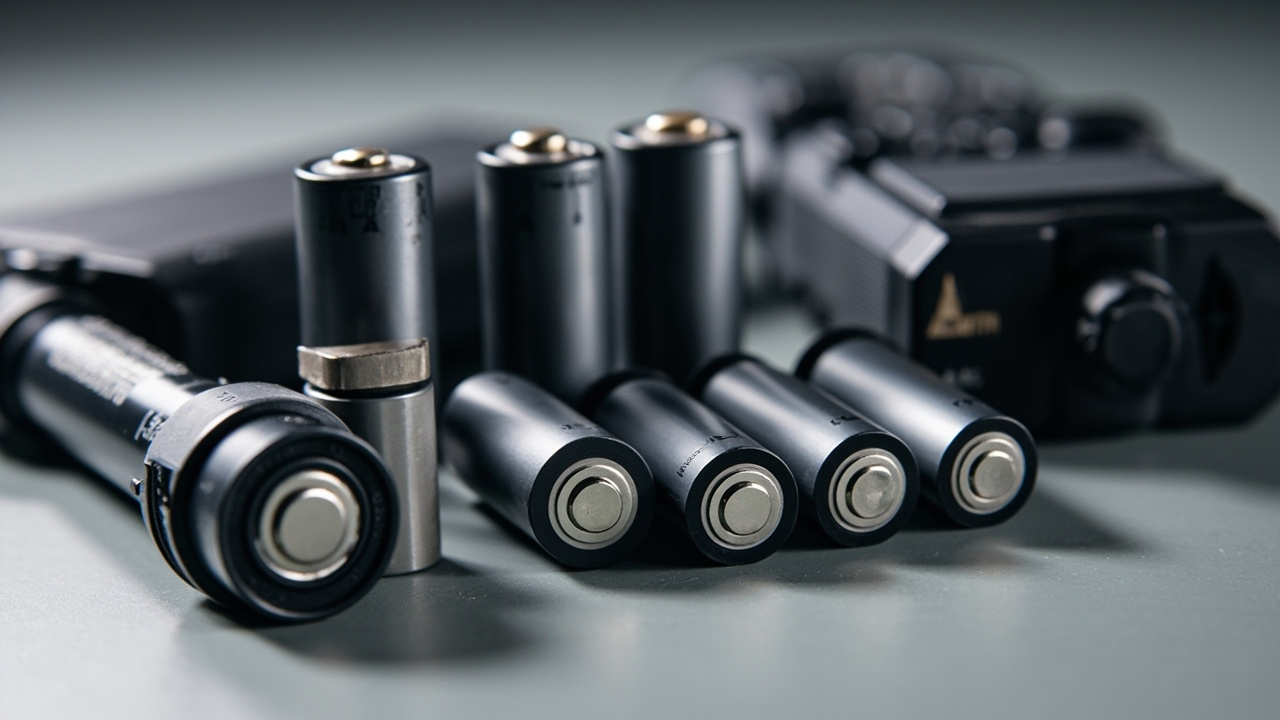
The 2025 assessment concerns rechargeable portable Li-ion batteries with internal circuitry specifically designed to be interchangeable with regular portable batteries of general use, according to the JRC Publications Repository. Common designations in scope are AAA, AA, D, C and 9V, according to the JRC Publications Repository. The broader regulatory category of portable batteries of general use includes AAAA, AAA, AA, C, D, 9V, A23 and 4.5V sold in the EU market, according to the full report text mirrored by EU Agenda.
Typical appliances named for the category are torches, smoke detectors, remote controls and radios where cells can be easily replaced by the end-user, according to the full report text mirrored by EU Agenda. For a bug-out bag, torches, radios and remote controls map directly to lighting, information and control functions carried in the pack.
The report notes that Li-ion portable batteries of general use are relatively new, with significant advancements in the past decade, according to the full report text mirrored by EU Agenda. Production is noted in Germany, the United States and China, according to the full report text mirrored by EU Agenda. More than 30 suppliers now offer solutions in the EU market, according to statements by lead author Diego F Quintero Pulido on LinkedIn describing the JRC publication.
How Li-ion drop-ins differ inside
The defining feature studied is internal circuitry to mimic the voltage output of a portable battery of general use, according to the JRC Publications Repository. That circuitry is what allows a Li-ion cell to present as a 1.5V AA or comparable standard size despite different underlying chemistry, according to the full report text mirrored by EU Agenda. Co-author Stephan Hildebrand noted that voltage typically produced by Li-ion chemistry is not an exact fit for these devices, yet a workaround makes operation possible, according to his LinkedIn post about the JRC publication.
The 2025 contents list dedicated chapters for characteristics, suppliers, standards, AA Li-ion portable batteries of general use, analysis of capacity of AA Li-ion portable batteries of general use, and analysis of electronics, according to the full report text mirrored by EU Agenda. Support work included the BESTEST lab in Petten and assistance identifying and procuring batteries to be tested and providing detailed tear-down, according to the full report text mirrored by EU Agenda. Review and correction support came from M. Steen and A. Pfrang, according to the full report text mirrored by EU Agenda. Contact is listed as Diego F Quintero Pulido at JRC Petten, according to the full report text mirrored by EU Agenda.
Recharge is via USB or external chargers, according to statements by Diego F Quintero Pulido on LinkedIn describing the JRC publication. Consistent voltage and higher energy density are listed as performance advantages for portable devices, according to the same author summary. For loadout planning, that means a radio or torch may hold output steadier through discharge when using a regulated Li-ion drop-in, while USB recharge allows top-up from a power bank already in the bag.
Test angles: capacity, electronics and compatibility
The abstract says the study examined potential benefits and drawbacks of using Li-ion portable batteries of general use as replacements for traditional batteries, including impact on environment, energy efficiency and cost-effectiveness, according to the JRC Publications Repository. Recommendations for future research and development are presented, according to the JRC Publications Repository.
Higher upfront cost per Wh, especially for smaller sizes, is listed as a drawback, according to the author summary on LinkedIn. Not all devices are compatible and technical hurdles remain, according to the same summary. Recycling and end-of-life management remain complex due to built-in electronics, according to the same summary. Standards and testing methods have yet to fully catch up with the battery types, according to the same summary.
The practical consequence is selective adoption rather than wholesale swap. Keep proven primary or NiMH cells for smoke detectors and any device flagged incompatible, and reserve regulated Li-ion AA, AAA, C, D or 9V units for high-use torches, radios and household portable electronics where steady voltage and rechargeability offset purchase price.
Announcement: durability floors proposed for August 2027
This section is an announcement about planned regulation, not a completed rule. The 2026 report analyses performance and durability parameters listed in Annex III of the Regulation for suitability to set minimum requirements, according to the JRC Publications Repository. It provides an overview of standards under development and takes different chemistries into account, according to the JRC Publications Repository. Chemistry-agnostic values for minimum requirements are suggested, according to the JRC Publications Repository.
For non-rechargeable batteries, values are proposed for average duration and delayed discharge performance, according to the JRC Publications Repository. Suggested minimum requirements would most likely lead to ZnC batteries being removed from the EU market, according to the JRC Publications Repository. Alkaline and lithium batteries will generally meet those requirements, according to the JRC Publications Repository.
For rechargeable batteries, minimum requirements are proposed for rated capacity, charge recovery and endurance in cycles, according to the JRC Publications Repository. Rechargeable batteries from all relevant chemistries including Ni-MH, Ni-Zn and Li-ion are expected to be able to meet those requirements, according to the JRC Publications Repository.
No quantitative tests for resistance to leakage are currently available, so no numerical minimum requirements can be set, according to the JRC Publications Repository. A requirement that batteries shall not leak during normal operation, transport, handling and storage should be included in the delegated act, according to the JRC Publications Repository.
What this means for a practical loadout
Use the two-report sequence as a buying filter. Choose common designations that match gear already packed, because the assessed interchange set is AAA, AA, C, D and 9V, according to the JRC Publications Repository. Prioritize devices the reports name as replaceable end-user applications, such as torches and radios, according to the full report text mirrored by EU Agenda. Verify charging method before purchase, because the assessed options include USB or external chargers, according to the author summary on LinkedIn.
Plan for cost and waste. Higher upfront cost per Wh is documented, according to the author summary on LinkedIn. Recycling complexity from built-in electronics is documented, according to the same summary. That points to fewer, well-matched rechargeables rotated through charger testing rather than bulk spares of every size.
Watch the August 2027 delegated act timeline for durability labeling, because Article 9 foresees adoption by that date, according to the JRC Publications Repository. If chemistry-agnostic floors for rated capacity, charge recovery and endurance in cycles are adopted, Ni-MH, Ni-Zn and Li-ion rechargeables are expected to be able to meet them, according to the JRC Publications Repository. For non-rechargeable backup stock, alkaline and lithium options will generally meet proposed duration requirements, while ZnC would most likely leave the market, according to the JRC Publications Repository.
Store and transport cells to avoid leakage risk, because a no-leak requirement during normal operation, transport, handling and storage is recommended for inclusion even without a numerical test, according to the JRC Publications Repository. Keep device compatibility checks in the packing routine, because not all devices are compatible, according to the author summary on LinkedIn.
Sources referenced
- JRC Publications Repository - Preliminary assessment of Li-ion portable batteries of general use in the EU (JRC143662) (https://publications.jrc.ec.europa.eu/repository/handle/JRC143662)
- JRC Publications Repository - Technical support to define minimum performance and durability requirements for portable batteries of general use (JRC146424) (https://publications.jrc.ec.europa.eu/repository/handle/JRC146424)