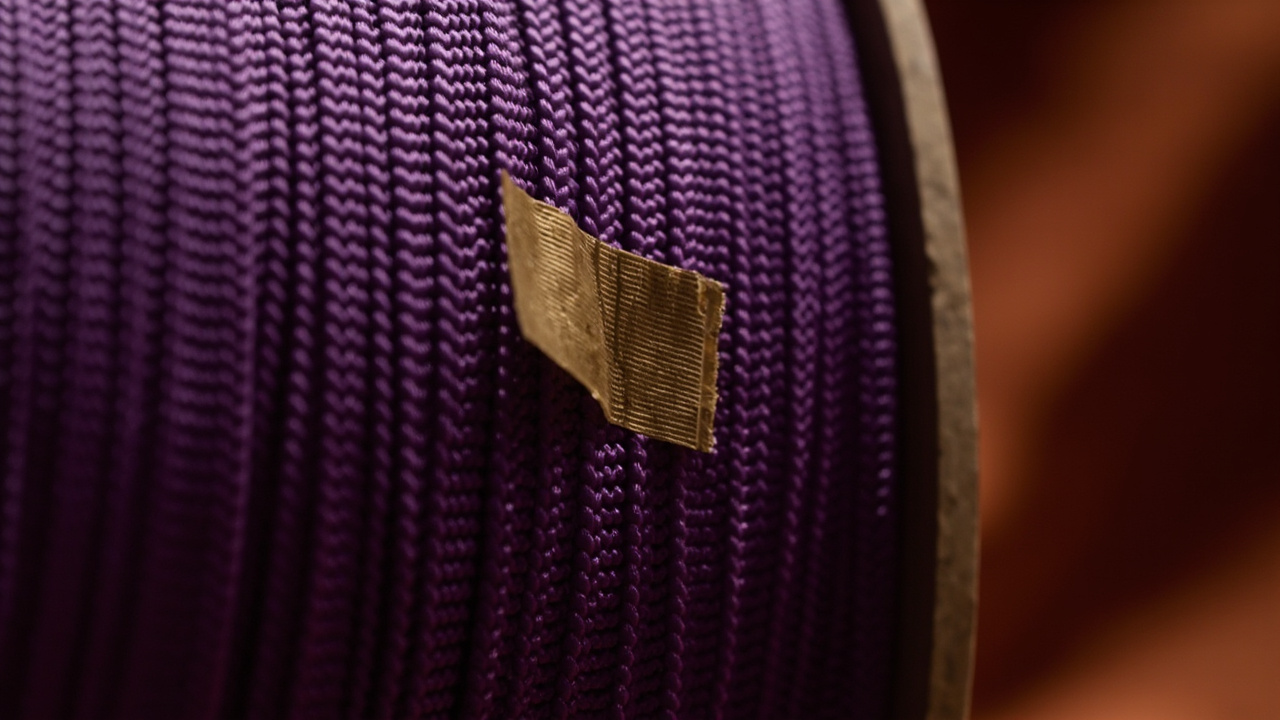
TL;DR: A 55-foot rappel-anchor failure on September 3 in Moab, Utah, was caused by bulk webbing that was two separate pieces joined with gold tape, according to reporting published as “Tape-Spliced Webbing Caused Another Serious Accident. Why Is It Still Being Sold?”
The September 3 fall in Moab
On September 3, a climber identified as Kate took a 55-foot fall in Moab, Utah, and survived, according to “Tape-Spliced Webbing Caused Another Serious Accident. Why Is It Still Being Sold?” Kate and her partner Lawrence had purchased what they were told was 100 feet of 1.5-inch nylon webbing from a gear shop in Moab the day before. They had intended to use the material for trad climbing and rappelling.
Kate and Lawrence were described as experienced in trad, sport and alpine climbing as well as canyoneering. Lawrence has been climbing since childhood. Kate has been climbing since 2022 and is training to be a guide. Both described themselves as safety oriented. They always wear helmets and use prusiks when rappelling. Kate works as an EMT, while Lawrence works as a physician’s assistant.
The pair were canyoneering on their return to Colorado after a week of trad climbing in Yosemite. They selected the Medieval Chamber route, rated 3A II, for a final day. After simul-rappelling off Morning Glory Arch, they sought the exit known as Climber’s Exit. That exit rappel was expected to be the last rappel before driving to Colorado Springs.
How the Climber’s Exit anchor was built
On Climber’s Exit, Lawrence rappelled first. At the base, he pulled both ends of a rope that had been slung around a boulder. The rope would not move. Without a new anchor, the team would have had to abandon the rope.
Lawrence then sent anchor material up to Kate so she could rebuild the anchor. Her replacement used 20 feet of the webbing bought the previous day. She formed a closed loop with a water knot and placed it around the same boulder. The pair routinely carried material in that configuration for bail situations. The 100 feet of new webbing had originally been bought for other projects.
Kate lengthened the anchor with a BHK knot. She arranged a rappel through a locking bail carabiner. The plan was to leave the webbing and carabiner in place. Both climbers had seen gold tape on the webbing at purchase, but attached no importance to it at the time.
Why partial weighting did not reveal the splice
Before committing to the rappel, Kate stood on a boulder below and partly loaded the system. The anchor held under that partial load. When she started the descent and applied full body weight, the tape joining two pieces of webbing separated.
She dropped into the slot canyon below. During the fall she struck the sandstone walls four times before impact. Contact with the walls reduced speed. The report credited that deceleration combined with her helmet with saving her life.
The author of “Tape-Spliced Webbing Caused Another Serious Accident. Why Is It Still Being Sold?” identified Kate as a friend and climbing partner. Kate asked that her last name be omitted. For the story the author also spoke with the search and rescue team that responded and researched other climbing accidents involving webbing.
What gold tape on a bulk spool means
Lawrence later said the pair had not given much thought to the gold tape on webbing bought off a spool in Moab. The retailer had not explained that tape marked a junction between two distinct pieces. Those pieces had been roughly stitched together and wound onto the same bulk spool.
That practice allows shorter production lengths to be combined for spooling. The buyer then sees what looks like a continuous ribbon. Without a complete unroll, the junction can remain hidden inside the coil or be mistaken for a price tag or end marker.
The result in this case was a 20-foot anchor loop that contained a non-load-bearing tape joint. A water knot and BHK knot elsewhere in the system did not compensate for the discontinuity. The joint separated only after full weighting began.
Manufacturer language versus in-store notice
Cypher, a maker of climbing hardgoods including bulk webbing spools, lists no warning about spliced sections bought in a store, according to the same report. Sterling, another bulk-webbing maker, addresses the issue on its website.
Sterling states, “Our larger spools of webbing often do contain taped splices allowing shorter sections of webbing to be spooled together on the same spool.” The company warns a person buying webbing by the foot from a retailer spool to inspect the full length because it may include a taped section.
Kate and Lawrence did not receive that instruction at the store. Because they bought in person rather than online, they did not see the website warning. No staff member told them inspection was needed.
What editors found in Moab on September 30
Kate and Lawrence bought 1.5-inch purple webbing at the Moab shop. They later called the store to describe the failure. When a Climbing editor visited that store on September 30, no 1.5-inch purple tubular webbing was in stock. None of the visible spools appeared to contain taped-together splices.
The report noted the store may have removed spliced inventory after the call. At a different Moab gear shop, however, the editor found webbing splices joined with tape. Photographs taken September 30 by Sam MacIlwaine showed bulk webbing containing distinct pieces spliced with tape and an editor pulling such a joint apart.
The continued presence of taped splices at the second shop means a buyer asking for feet off a spool can still receive a hidden joint. The hazard is not limited to one color, one maker or one store.
What this means for cordage in a bug-out bag
People assembling evacuation kits often pack short lengths of webbing for shelters, litters, repairs and emergency rappels. The Moab incident shows that cordage bought by the foot cannot be assumed continuous. For a bug-out loadout, the practical change is to treat every new length as suspect until the entire piece has been laid out and examined.
A technical guide titled “Bag Webbing: What Manufacturers Must Confirm Before Production,” published by TRAMIGO, states that webbing should be approved as a complete system rather than selected by appearance alone. The guide lists fiber content, width, thickness, weave, stretch, breaking strength, colorfastness, finishing, testing, packaging and inspection criteria as items to confirm. It recommends measurable specifications, production tolerances and a documented quality-control plan before bulk production.
That industrial checklist translates to three field checks. First, define load, stretch, hand feel, abrasion and appearance needs before requesting material. Second, confirm the difference between nominal dimensions and production tolerances. Third, use recognized test methods, including relevant ASTM methods, when strength and elongation affect safety. The guide also recommends approving a signed reference sample and inspection checklist.
How to inspect bulk webbing before packing it
The TRAMIGO guide warns that an order reading only “black nylon webbing” leaves width, thickness, weave pattern, fiber construction, finish, color standard, roll length, packaging, testing method and tolerance unanswered. The same gap applies when a shop cuts feet from a spool without paperwork. Ask what fiber and weave are being sold and what tolerance applies to width and length.
Unroll the full cut length on a clean floor. Look along both faces for tape flags, stitching, thickness changes and color shifts. Flex the ribbon to reveal a taped butt joint that lies flat under tension. If a splice is found, cut it out or set that section aside for non-load uses such as gear ties or padding.
For shoulder straps, the TRAMIGO guide prioritizes tensile strength, comfort, abrasion resistance and controlled elongation. For tactical or outdoor bags, it prioritizes resistance to repeated loading, moisture, dirt and hardware interaction. An evacuation anchor, haul loop or rappel extension falls in the second category, where repeated loading and dirt exposure matter.
Do not pack a taped splice for life-safety use. Do not rely on a partial body-weight test on a nearby boulder to prove continuity, because Kate’s system held under partial load and failed under full load. Store inspected, continuous lengths coiled separately with length and purchase date noted. Keep sewn slings from a climbing manufacturer for rappelling and use bulk webbing only after the full-length check described by Sterling and documented by the September 30 shop visit.
Sources referenced
- Bag Webbing: What Manufacturers Must Confirm Before Production - TRAMIGO (https://www.tramigosourcing.com/news/bag-webbing-what-manufacturers-must-confirm-before-production/)