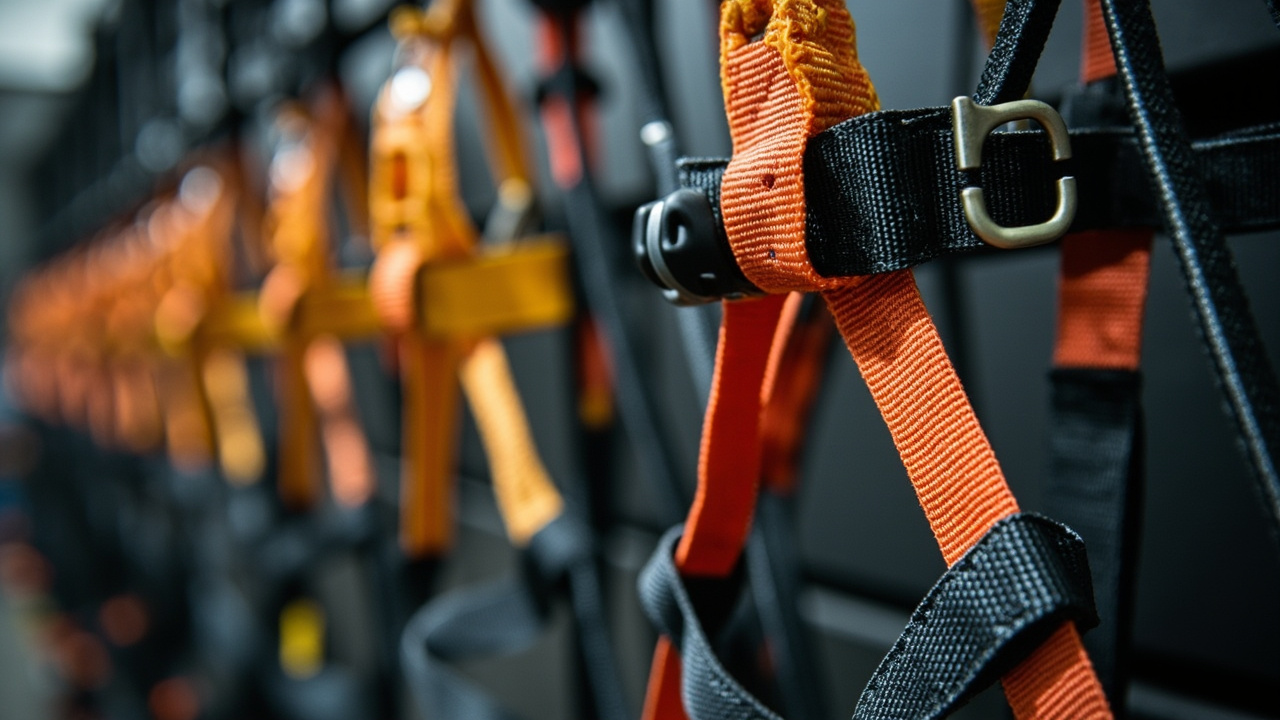
TL;DR: Petzl announced an important voluntary recall and redesign covering 27,500 Gym, Pandion, and Panji climbing harnesses after reports that the harness could be put on backwards and linked to a non-weight-bearing elastic band, with at least one serious injury reported.
Announcement: 27,500 harnesses covered by redesign
Petzl has created a redesign for 27,500 climbing harnesses to address a potential fall hazard, according to a recall filed with the U.S. Consumer Product Safety Commission, as reported by Petzl Recalls Thousands of Harnesses to Prevent ‘Backwards’ Fit Issue-September 2024-www.zzdsport.com.
This is an announcement of a voluntary recall and planned redesign, not a description of a completed repair campaign. The updated company webpage now calls the redesign an important voluntary recall affecting the brands Gym, Pandion, and Panji harnesses.
The filing identifies a fall hazard tied to incorrect use. The move comes after the brand was notified that its possible to don the harness backwards and subsequently connect to the non-weight bearing leg loop elastic band.
At least one person suffered serious injuries after taking a fall in one of the harnesses. That injury report is the documented harm that moved the issue from guidance to formal action.
The U.S. Consumer Product Safety Commission is the federal agency that publishes product recalls and product safety warnings for viewing at cpsc.gov, according to the CPSC Posts Product Recalls and Product Safety Warnings to its Web Site release from the U.S. Consumer Product Safety Commission. Federal law prohibits any person from selling products subject to a Commission-ordered recall or to a voluntary recall undertaken in consultation with CPSC, according to that same CPSC release.
Why backwards wear creates a fall hazard
The hazard involves orientation and connection point confusion. When the harness is put on backwards, a user can connect to the non-weight bearing leg loop elastic band instead of the structural front attachment.
To help prevent that error, Petzl will redesign the affected harnesses so its easier for new users to attach the carabiner or tie a rope in the right place, as reported by Petzl Recalls Thousands of Harnesses to Prevent ‘Backwards’ Fit Issue-September 2024-www.zzdsport.com.
Many climbing harnesses, including the three affected Petzl models, have the belay loop located in front and in a bright color to try and ensure correct usage. The bright color and front position are intended as visual cues for correct clipping and tying.
Check for the front-facing belay loop before every use. Confirm that the loop you intend to clip is the reinforced front loop, not a rear-facing elastic element. Ask a partner to confirm front-versus-back orientation when you are unfamiliar with a rental or loaned harness. Pause and re-check if straps feel twisted or the tie-in point sits behind you.
Supervise newcomers closely during fitting and tie-in. Provide hands-on instruction for first-time users rather than relying on observation alone. Keep attention on the connection step until the rope or carabiner is confirmed in the correct loop.
Which models and serial numbers are included
The recall names three model families: Gym, Pandion, and Panji. Affected products include the following models, depending on the serial number, as shown in a Petzl graphic cited by Petzl Recalls Thousands of Harnesses to Prevent ‘Backwards’ Fit Issue-September 2024-www.zzdsport.com.
Owners should treat serial-number checking as the deciding step. Locate the harness label and compare the full serial marking against the company recall graphic and instructions. Do not rely on model name alone when the notice states that inclusion depends on serial number. Keep the harness out of service until you have confirmed whether your serial range is included.
Of the affected harnesses, 22,000 units were sold in the U.S. and 5,800 in Canada between January 2019 and May 2024. Together those regional figures account for the 27,500-unit total described in the filing.
The long sales window means gym rental fleets, adventure-park issue counters, school programs, and personal kits purchased over more than five years could be involved. Review purchase records from that period. Check storage bins, loaner closets, and second-hand acquisitions for the three named models. Tag any suspect unit so it is not borrowed or issued before verification.
Where and when the harnesses were sold
The harnesses were sold at outdoor retailers — including KarstSports, PeakTrading, Backcountry, OmniProGear, and Moosejaw — and priced between $60 and $70, according to Petzl Recalls Thousands of Harnesses to Prevent ‘Backwards’ Fit Issue-September 2024-www.zzdsport.com.
That price and retail list helps owners recognize a past purchase. Look for receipts or order histories from the named retailers showing a harness purchase in the $60 to $70 range. Contact the seller for order details if you no longer have paperwork. Use retailer account histories to narrow down purchase timing within the January 2019 to May 2024 window.
For more information on the recall or to initiate a repair, users can contact Petzl America. Use the company contact channel listed in the current recall notice to start the repair process. Have model name, serial number, and purchase location available when you call or write. Follow the instructions you receive and keep a copy of your submission.
From safety alert to important voluntary recall
Initially, Petzl issued a safety alert instead of a recall, meaning the redesign was optional. Petzl is not issuing a recall because the product complies with all industry and legislative requirements, and Petzl does not believe there are any design or manufacturing defects, the company said at that earlier stage, as quoted by Petzl Recalls Thousands of Harnesses to Prevent ‘Backwards’ Fit Issue-September 2024-www.zzdsport.com.
That changed Thursday afternoon. The updated webpage now calls the redesign an important voluntary recall affecting the brands Gym, Pandion, and Panji harnesses.
The page retains educational information on how operators of climbing gyms and adventure parks can ensure theyre using the harnesses correctly. In a safety alert later removed from the Petzl website, the company pointed to the importance of adequate supervision for people new to the sport.
Climbing gyms and adventure parks manage activities that are inherently dangerous, the company said. They have seen significant expansion in recent years, attracting an ever-increasing number of customers. Some of these customers are new to vertical activities and have little or no experience with how to safely engage in these dangerous activities, according to the same Petzl statement cited by Petzl Recalls Thousands of Harnesses to Prevent ‘Backwards’ Fit Issue-September 2024-www.zzdsport.com.
Operators should keep that educational material with the recall notice. Train staff to demonstrate correct donning and to verify belay-loop connection before dispatch. Post the orientation check where harnesses are issued. Schedule refresher briefings for seasonal or volunteer belay staff.
What this means for an evacuation-ready loadout
For readers who keep a rope, harness, and descent kit for emergency egress or volunteer response, this recall carries a direct loadout consequence. A harness that can be put on backwards and clipped to a non-weight bearing leg loop elastic band does not belong in a ready bag until its status is resolved.
Remove any Gym, Pandion, or Panji harness from your bug-out bag, vehicle kit, or cache until the serial number is checked. Substitute only a verified harness that you have fitted and practiced with. Practice donning in daylight and low light so front orientation becomes automatic. Store the user instructions with the harness rather than separately.
Do not plan to learn harness use during an evacuation. Complete fitting, buddy checks, and supervised practice before you pack the item. Keep beginners under direct supervision whenever a harness is used for training. If you manage group gear, separate recalled-status units from cleared units and label both groups clearly.
In January, Petzl announced a safety problem with Grillon anchor systems sold between October 2023 and December 2023. An unknown number of the devices were sold with the rope incorrectly installed, as noted by Petzl Recalls Thousands of Harnesses to Prevent ‘Backwards’ Fit Issue-September 2024-www.zzdsport.com. That separate January announcement is not part of this harness recall, and the two issues should not be merged. Check lanyards and anchor systems under their own notices and serial ranges.
For general recall handling, stop using a product that is subject to a voluntary recall undertaken in consultation with CPSC and do not sell it onward. Federal law prohibits any person from selling products subject to such a voluntary recall, according to the CPSC Posts Product Recalls and Product Safety Warnings to its Web Site release. Claim the remedy through the company contact named in the notice and retain proof of your request.