TL;DR: A Sept. 17, 2026 podcast episode revisits evacuee Gary Stronach's sudden lockout from Mineville during the 2008 Porters Lake wildfire to show why a ready go-bag, pet plan and neighbor contact list matter when roads close and updates lag.
New episode centers on a sudden evacuation with no time to pack
The newest verified fact is the release on Sept. 17, 2026 of Season 3, Episode 31 of Wildfires, Floods, and Chaos Communications: Management of Issues, Crises and Disasters, titled in listings as a conversation with evacuee Gary Stronach about the Porters Lake fire, according to the Buzzsprout episode page for Butterfly Effect Communications. The listing gives a duration of 57:36 and names host Tim Conrad and guest Gary Stronach.
The episode description identifies Stronach as an evacuee from the 2008 Porters Lake wildfire in Nova Scotia, according to that same Buzzsprout episode page. The description says the fast-moving fire surrounded Candy Mountain Road while Stronach was cut off from home, unable to reach neighbours and searching for information.
The companion listing on iVoox carries the same Sept. 17, 2026 date and 57:36 duration and describes the installment as an episode of Wildfires, Floods, and Chaos Communications: Manag from Butterfly Effect Communication, according to the iVoox episode page. That iVoox page repeats the focus on communication gaps, community connection during crisis and the emotional toll that followed, including survivor's remorse that lingered for years.
For readers who keep a bug-out bag, the announcement matters because the case involves people who were not home when access closed. The episode frames its practical advice as what to take, what to leave, how to stay calm and why self-reliance matters when official information is scarce, according to the Buzzsprout episode page.
Locked out at Highway 107 as Mineville roads closed
Stronach recalls being at work while his wife and daughter were in Halifax, with nobody home, according to the transcript excerpt carried with the episode listing. He describes what looked like a fog bank at the mouth of the harbour before his wife called about a road closure.
His wife started toward home and then called to say they could not get into the house and could not go into Mineville because the road had been closed, according to that transcript excerpt. Stronach says he left work and drove home, saw smoke on the horizon, reached Highway 107 and was turned around.
The episode chapters label that sequence as confusion as roads close and family can't get home, smoke on the horizon and being turned around at Highway 107, and seeing the fire crest the hill and speaking with RCMP, according to the Buzzsprout episode page. Another chapter is titled viewing the fire across the lake and realizing homes were burning.
The transcript excerpt says the family went to a daughter's house or apartment, tried to find out information, called people and could not reach anybody on day one. It describes news reports as sketchy and says the family was in the dark because officials did not know more than residents did at that point.
For a practical loadout, the consequence is direct: a bag staged at home does not help if no one can re-enter. The episode's own advice chapters point to essentials, pets and calm thinking for sudden evacuations, according to the Buzzsprout episode page. That structure supports keeping documents, medication, pet carriers and a change of clothes in a vehicle or workplace locker as well as at home when fire weather threatens.
What return revealed: house spared between losses
Conrad's narration says Stronach and his wife returned home in June 2008 to an area surrounded by devastation from an extreme wildfire, according to the transcript excerpt carried with the episode listing. It says the once-thick forest behind the property, enjoyed for decades, was reduced to ash and bare stems.
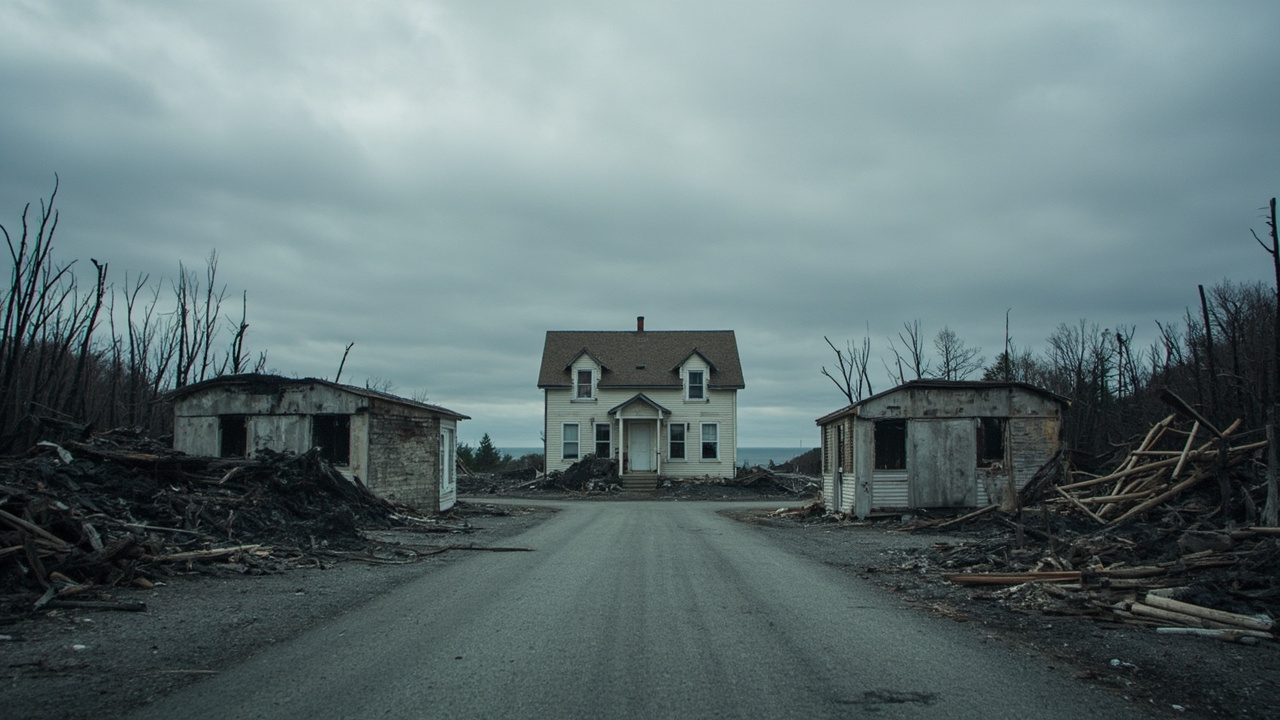
The same narration says sheds and garages with tools, vehicles and equipment throughout the neighborhood were gone or damaged, according to that transcript excerpt. It says the home next to the Stronachs on the right was reduced to a foundation, while across the street the fire stopped as it reached the salty water of the Atlantic Ocean.
To the left, the neighbours' house also sat in a pile of rubble, according to that transcript excerpt. The follow-up discussion on site recalls that the fire came into the backyard on both sides and that Stronach was in the middle, with properties on both sides destroyed.
The scale described in the episode is 2,000 hectares burned in a few days, with the fire raging into communities that Friday afternoon under 100 kilometre an hour winds, according to that transcript excerpt. It says firefighters battled all night to save many homes in Mineville, including the Stronachs' home.
Conrad also says Stronach agreed to appear in a thank-you video to be played at a community barbecue with firefighters weeks after most affected people were allowed to go home, according to that transcript excerpt. The episode page links that 2008 Thank You video including footage from the wildfire at a YouTube address, according to the Buzzsprout episode page.
When official updates lagged, word of mouth filled the gap
The episode description says Stronach reflects on the confusion of the first hours, the struggle to find accurate updates and the bond that helped his neighbourhood grieve and rebuild together, according to the iVoox episode page. The chapter list makes the breakdown explicit.
Chapters include a first community meeting with limited resident-focused information, communication breakdown and inability to reach neighbours, searching for neighbours and confirming their safety, and word-of-mouth as the primary information source, according to the Buzzsprout episode page. Later chapters cover reconnecting with neighbours and tracking people down.
The transcript excerpt says a large-scale evacuation became apparent about 45 minutes to an hour after first units arrived, as tactical, command-post, natural-resources and RCMP resources assembled, according to the voice identified in the listing as an unidentified speaker describing the response. That timing helps explain why residents seeking immediate household-level answers did not get them.
Other chapters listed are community strength, gratitude and hand-painted signs, grieving together and the importance of community gatherings, and coping through connection and rum tastings with Clive, according to the Buzzsprout episode page. The episode also includes a mental-wellbeing message and crisis-support resources at the 15:47 mark, according to that chapter list.
The loadout consequence is that communications gear belongs alongside food and clothing. A battery radio, phone power bank, printed contact sheet and prearranged out-of-area check-in point match the conditions described, where calls failed and neighbours had to be tracked down in person. The episode's short-term planning and self-reliance chapter reinforces the same point, according to the Buzzsprout episode page.
What to take, what to leave and why responders triage broadly
The chapter at 20:38 is labeled advice for sudden evacuations covering essentials, pets and calm thinking, according to the Buzzsprout episode page. The chapter at 22:02 is labeled why self-reliance matters during mass emergencies. The chapter at 24:29 is labeled emergency response priorities covering mass needs versus individual needs.
Those titles convey the episode's distinction between household needs and system priorities without adding outside doctrine. The response excerpt says the first priority described by responders was protection of property and people, with personnel focused on trained tasks, according to the transcript excerpt carried with the episode listing.
Stronach's gratitude statement is explicit: he says any firefighter and anybody who had anything to do with saving the community is welcome at his door any time, day or night, and that thanks can never fully express the debt, according to that transcript excerpt. Conrad revisited Stronach at his house in May 2025, according to that same transcript excerpt.
The later chapters turn to emotional aftermath and survivor's remorse at 26:13 and loss, recovery and neighbours rebuilding from nothing at 27:47, according to the Buzzsprout episode page. For a go-bag, the takeaway is to pack for displacement even if the structure survives: neighbours rebuilding from nothing needed documents, cash, prescriptions and basic tools long after flames passed.
An announcement about training attached to the release
The Sept. 17 episode is presented together with a training announcement, and that announcement should be read as an announcement rather than a completed course outcome. Chapters from 41:00 through 50:00 cover a Canadian Training platform overview, Become the Broadcaster confidence and communication training, equipment guidance, operational communications workflows, stress during large-scale emergencies, an upcoming 12-week program beginning in October and future learning modules, according to the Buzzsprout episode page.
A separate Sept. 14, 2026 QuickBits update from the same podcast previews Stronach's story as a return-home account in which properties on both sides of his home were destroyed, according to the Buzzsprout page for that QuickBits installment. That preview says listeners would hear the audio episode that week and points to CommunicationsPodcast.com for both episodes.
The same QuickBits page announces the relaunch of CanadianTraining.ca with dozens of courses, including the 12-week Operational Communications program and the Become the Broadcaster workshop, with pre-sales open and a 30% discount using the code COMMUNICATIONSPODCAST, according to that Buzzsprout QuickBits page. It also marks 30 podcast episodes, over 24 hours of audio and 16 hours of video, and recaps summer wildfire fieldwork including footage from three mega-fires with helicopter and fixed-wing attacks, according to that page.
For Prepper Packs readers, the practical effect is narrow: treat the training as a planned October program available for pre-sale, not as a tested field fix. The tested lesson remains the evacuation account itself — stage essentials and pet needs where they can be reached, keep neighbour contacts on paper, and expect early information to be incomplete.
Sources referenced
- Survivor’s Remorse and Rebuilding Community After the Porters Lake Fire | With evacuee Gary Stronach - Butterfly Effect Communications (Buzzsprout) (https://butterflyeffectcomms.buzzsprout.com/2357757/episodes/19820668-survivor-s-remorse-and-rebuilding-community-after-the-porters-lake-fire-with-evacuee-gary-stronach)
- Survivor’s Remorse and Rebuilding Community After the Porters Lake Fire | With evacuee Gary Stronach - Podcast on iVoox (https://www.ivoox.com/en/survivor8217s-remorse-and-rebuilding-community-after-the-porters-audios-mp3_rf_180756959_1.html)