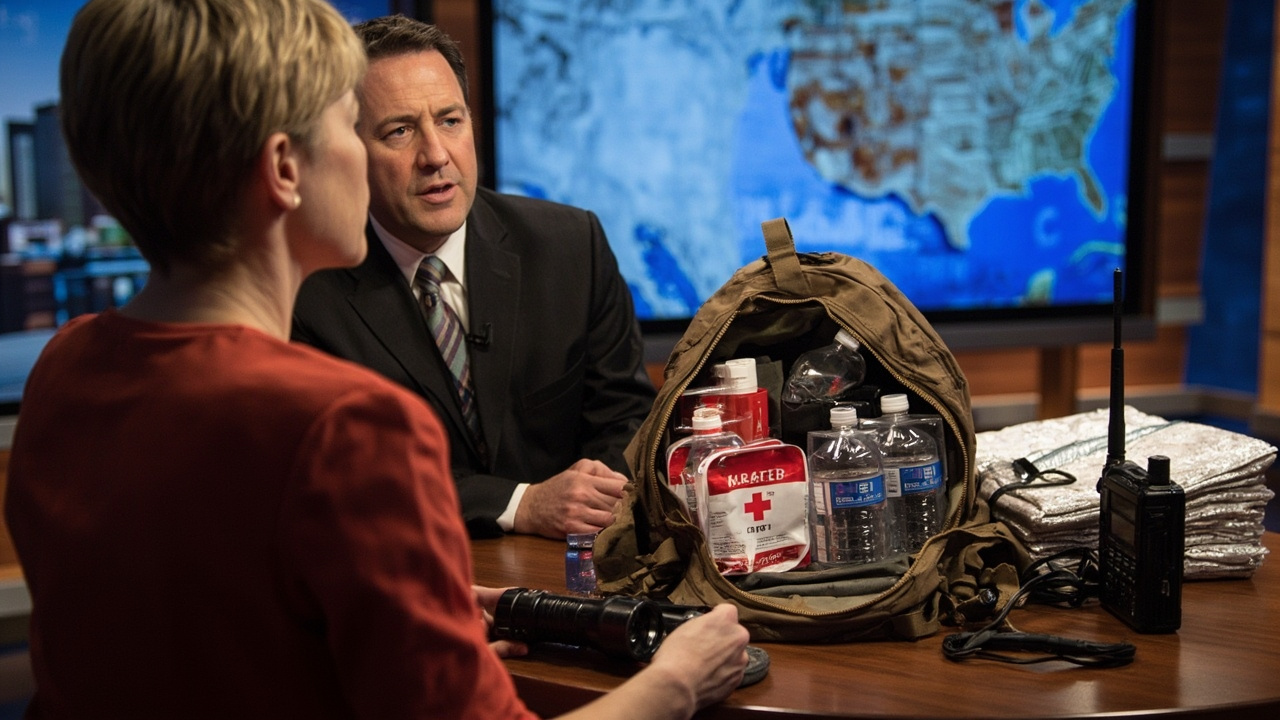
TL;DR: On Sept. 1, 2026, Oklahoma City's Living Oklahoma interview, Tulsa's Preparedness Month plan, and Guymon's preparedness fair together told residents to keep a 3-day go-kit and household supplies ready.
What happened on Sept. 1 in Oklahoma
Oklahoma opened September with three related preparedness messages delivered the same day. According to Living Oklahoma spotlights Red Cross disaster preparedness tips and emergency kit basics, the KOKH program aired an interview on Tuesday, Sept. 1, 2026, at 9:59 AM with Matthew Trotter from the American Red Cross about disaster preparedness and what viewers should have in an emergency kit.
According to Tulsa officials encourage family disaster preparation during National Preparedness Month, officials with the Tulsa Department of Emergency Management on Tuesday, Sept. 1, 2026, at 1:35 PM encouraged families to prepare during National Preparedness Month in September.
According to City of Guymon invites public to Emergency Preparedness Fair Tuesday, the City of Guymon invited the public to its 3rd Annual Emergency Preparedness Fair on Tuesday from 5:30 p.m. until 7:30 p.m. in the Texas County Activity Center at 402 N Sunset Ln.
Who delivered the guidance
The Living Oklahoma segment identified the guest as Matthew Trotter from the American Red Cross. The article was credited to Matthew Stafford and directed viewers to an interview and to local American Red Cross resources.
The Tulsa message identified the speaker as Adam Woodard, director of emergency management for Tulsa. The article was credited to FOX23.com News Staff.
The Guymon invitation was credited to Ruben Aleman and attributed to KFDA. Organizers cited in that report listed preparedness partners present at the fair.
Announcement: Guymon fair was scheduled for Tuesday evening
The Guymon fair was presented as an announcement for an event planned for Tuesday evening. The reported hours were 5:30 p.m. until 7:30 p.m.
The reported location was the Texas County Activity Center at 402 N Sunset Ln. in Guymon, Oklahoma.
The event was described as free and family friendly. The report said the event would include giveaways, family activities and a free hot dog feed provided by local businesses.
What the fair planned to show
Organizers said the fair would have hands-on demonstrations and preparedness partners. Named participants in the report included a rollover simulator, the National Weather Service, Civil Air Patrol, American Red Cross and more.
Organizers said there would be strong visual opportunities throughout the evening. Listed opportunities included emergency-response equipment, demonstrations and interactive activities.
Tulsa's three-step announcement for September
Tulsa Department of Emergency Management officials encouraged three steps for National Preparedness Month. Tulsa Director of Emergency Management Adam Woodard was quoted saying, "National Preparedness Month is a great time to take a few small steps that will make a big difference in being prepared during an emergency."
Woodard said the city was encouraging residents to make sure family members have an emergency plan, build an emergency kit and know how to get emergency information.
Woodard was also quoted saying, "If there's one takeaway from Disaster Preparedness Month, it's that preparing in advance can make a huge difference when an emergency does happen."
Step one: make an emergency plan
Tulsa officials said having a plan in place before disaster strikes can often reduce stress and save money. They also said it can save lives by saving time.
Woodard said a family plan will be unique to each family. He said to start by talking with members of the household about how alerts will be received, where to shelter inside the home, where and how to evacuate the home and the communication plan.
He said not to wait until the last minute to decide what to do to keep family members safe. The Tulsa report pointed to a FEMA family emergency plan guide for outlining an emergency plan and information needed after the disaster passes, such as family doctor information, insurance information and contact information for family and friends.
Separately, Red Cross described two meeting places
According to Red Cross shares low-cost ways to build an emergency kit at home, published Sept. 1, 2026, at 12:37 PM PDT and credited to Tom Aizenberg, the American Red Cross of Southern Nevada said families can prepare at no cost by making an emergency plan with two meeting places.
That report also listed writing down emergency contacts separate from a phone. It listed planning for where pets can go during an evacuation.
It listed signing up for local emergency alerts. It listed downloading the free Red Cross Emergency app.
Step two: build an emergency kit
Tulsa officials said gathering essential items such as food, water and medicine can help keep a family safe, stable and comfortable during a disaster situation.
The Tulsa report said a basic emergency kit will contain a flashlight, a first aid kit, water, food, a battery-powered or hand-crank radio, printed copies of emergency contact numbers and chargers or batteries for electronic devices.
The report also said to keep copies of important documents like insurance policies, identification and bank account records saved electronically and accessible online.
The report suggested thinking about items used every day and considering which ones would be useful in an emergency kit. It pointed to a list of basic emergency supplies to keep in the home and car.
Go-kit and stay-at-home amounts cited by Red Cross
The Southern Nevada Red Cross report recommended two kits. It described a go-kit with at least three days of supplies for evacuation.
It described a stay-at-home kit with two weeks of food and water and, if possible, a one-month supply of medication.
The report quoted Rachel Flanigan, executive director of the American Red Cross Southern Nevada Chapter, saying, "Getting prepared doesn't mean buying everything at once." The same quote continued, "Start with what you already have, make a plan and add a few useful items as your budget allows."
What to put in the container first
The Southern Nevada Red Cross report recommended starting with items already at home. Listed starter items included a backpack or container, flashlights, blankets, charging cables, water bottles, a can opener and basic tools.
It also recommended copies of important documents and written emergency contacts in case phones lose service. The Tulsa report separately recommended printed copies of emergency contact numbers.
The Southern Nevada report said additional supplies can be added gradually through discount stores, clearance sales or secondhand shops. It advised checking used items for cleanliness and function, and avoiding used safety equipment or medication.
Needs for children, pets and medical equipment
The Southern Nevada Red Cross report said households with children may need diapers and formula. It said pet owners should include food, medication, leashes and carriers.
It said those relying on medical equipment should plan for backup power. The Tulsa report separately said to consider medicine as part of gathered essential items.
Step three: know how to get emergency information
Tulsa officials said it is important to know how to get trusted information before, during and after an emergency. They said to sign up for alerts from trusted sources like the National Weather Service, local governments or local news providers.
They said it is best to figure out how the family will receive emergency alerts before an actual emergency. Listed options included following the National Weather Service Tulsa online and on Facebook.
Listed options also included enabling Wireless Emergency Alerts on a cellphone to receive information from state and local areas. They included downloading the FEMA App, available in English and Spanish, for weather alerts and safety tips.
The Tulsa list also included learning what Tulsa's various emergency sirens sound like. It included getting a battery-powered or hand-crank radio to listen to NOAA Weather Radio for local alerts.
Response workload cited alongside the tips
The Southern Nevada Red Cross report said Nevada families can face wildfires, earthquakes, floods, severe winter storms, power outages and home fires.
The report said Red Cross of Southern Nevada disaster workers responded in 2025 to 264 home fires and helped 1,211 people. It said volunteers so far this year have responded to 206 home fires and helped 784 people.
The report also said the Red Cross of Southern Nevada offers free smoke alarm installations for eligible households through its Home Fire Campaign. It said appointments can be requested through the link in that report.
What this means for a practical loadout
For a bug-out bag, the overlapping Oklahoma and Red Cross guidance points to a backpack or container packed for evacuation with at least three days of supplies. Contents named across the reports include food, water, water bottles, flashlight, first aid kit, battery-powered or hand-crank radio, chargers or batteries, charging cables, blankets, can opener, basic tools, printed emergency contacts and copies of important documents.
For vehicle and home backup, the Tulsa report points to keeping basic emergency supplies in the home and car. It also points to electronically accessible copies of insurance policies, identification and bank account records.
For household planning, the guidance points to a written household plan covering alerts, indoor shelter location, evacuation route and communications, plus two meeting places and a pet destination. It points to enabled Wireless Emergency Alerts, the FEMA App and a battery-powered or hand-crank radio for NOAA Weather Radio.