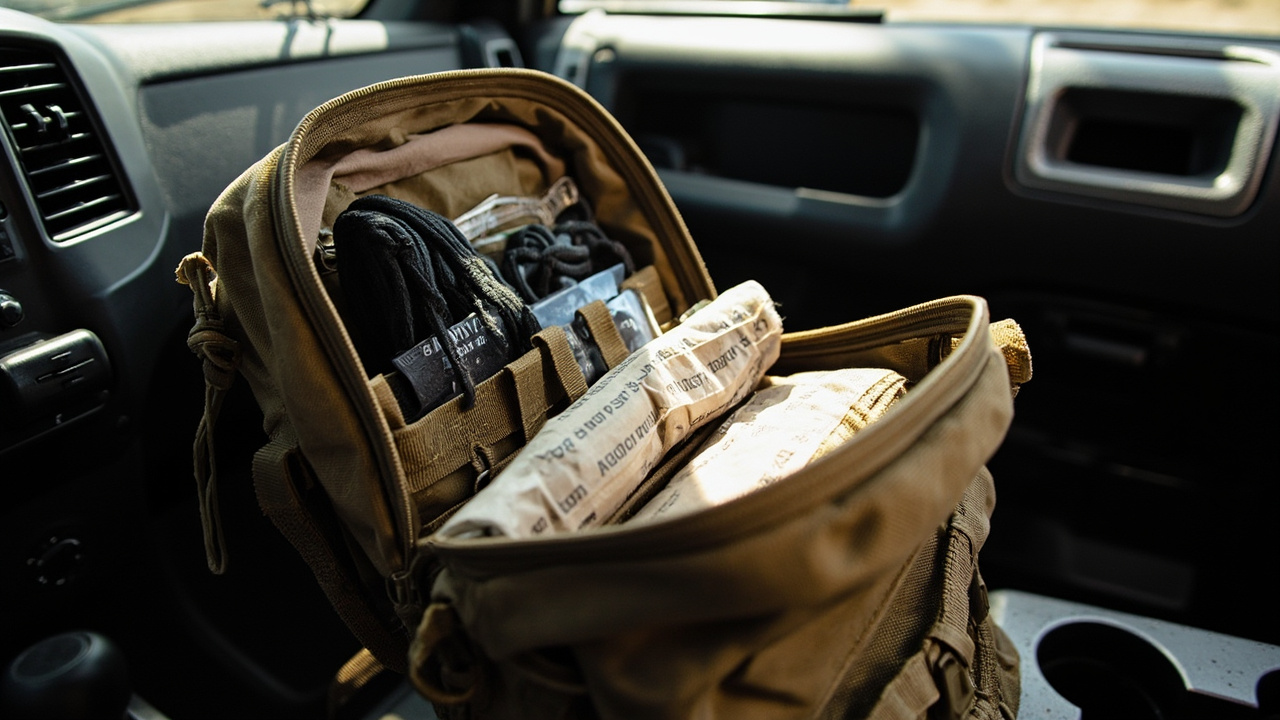
TL;DR: A Sept. 19, 2026 hands-on test found My Medic's Everyday Carry Kit packs bleeding-control and chest-injury tools into an 8.5-ounce MOLLE pouch rated for one to two people.
What the newest verified testing found
According to Adventure Rigs Magazine, writer Patric Fransko tested the coyote-colored Everyday Carry Kit and described it as My Medic's most portable trauma kit. The review, published Sept. 19, 2026, reports the pouch measures roughly 5.25 x 4.75 x 2 inches and weighs about 8.5 ounces. That footprint lets the kit clip to a shoulder strap, fit in a door pocket, or mount flat against a console, according to Adventure Rigs Magazine.
According to Gun Beaver, a second evaluation published Sept. 19, 2026 found MyMedic builds MyFAK-line kits with trauma-grade supplies, organized storage, and a bundled professional training course. Gun Beaver states its coverage is vetted by a working law enforcement officer who serves as a department armorer and sniper, buys its own gear, and accepts no payment for placement or ranking. The outlet's verdict calls MyMedic a legitimate category leader for truck, range-bag, or front-closet use covering real emergencies.
The two evaluations converge on the same practical point. According to Adventure Rigs Magazine, the Everyday Carry Kit is a companion first-response kit for the first, most critical minutes of a severe injury before a larger kit or evacuation plan takes over. According to Gun Beaver, the standard MyFAK weighs nearly two pounds and works best bolted to a vehicle or kept as a range-bag or basecamp kit rather than carried on the body. Together, the reports position the 8.5-ounce Everyday Carry Kit as the grab-and-go complement to a heavier vehicle kit.
Inside the Everyday Carry Kit loadout
According to Adventure Rigs Magazine, the tested pouch held eight items total. The outlet lists two vented chest seals with a one-way valve for penetrating chest wounds, a RATS tourniquet for arterial bleeding on a limb, an emergency pressure bandage measuring 4 inches by 36 inches, a QuikClot hemostatic dressing, a pair of nitrile gloves, and a My Medic Marker for noting tourniquet application time on skin or tape.
According to Adventure Rigs Magazine, the chest seals are intended to address penetrating chest wounds and prevent tension pneumothorax. The same review describes the RATS tourniquet as compact and easy to apply for stopping arterial bleeding from a serious laceration. The review describes the pressure bandage as a compact trauma dressing built for serious bleeding control and describes the QuikClot dressing as using a clotting agent to slow traumatic bleeding faster than gauze alone.
According to Adventure Rigs Magazine, every item addresses a severe failure mode rather than general comfort. The review contrasts that approach with scraped-knee kits containing gauze pads, adhesive bandages, and antiseptic wipes. The My Medic Everyday Carry Kit is built around uncontrolled bleeding and chest trauma, which the review identifies as the two injuries that kill fastest when a vehicle rolls, a winch line snaps back, or a blade slips while clearing brush.
According to Gun Beaver, MyMedic organizes its MOLLE-compatible trauma kits around the M.A.R.C.H. protocol covering Massive hemorrhage, Airway, Respiration, Circulation, and Hypothermia. The outlet traces the company origin to a founder who lost his father in a car accident where the ambulance took 45 minutes to arrive. That origin, according to Gun Beaver, is reflected in kits intended for a bad cut, a gunshot wound, or a car accident rather than scrapes and headaches.
How the pouch is built to ride in a vehicle
According to Adventure Rigs Magazine, the Everyday Carry Kit uses a vertical bi-fold design with upward-facing pockets. Contents are visible and grabbable at a glance rather than buried under flaps, a layout the review calls meaningful for a stressed, gloved, or one-handed user. The reviewer frames reach as capability, writing that a kit that cannot be reached fast enough is functionally a kit that is not available.
According to Adventure Rigs Magazine, the exterior panel is Hypalon, described as a durable, abrasion- and UV-resistant synthetic rubber used in marine and overland gear. The review states the material resists scuffs against roof racks and exposure to dust and trail use better than most nylon weaves. The panel is laser-cut for MOLLE compatibility, allowing mounting to a seat back, roll cage, or pack, according to Adventure Rigs Magazine.
According to Adventure Rigs Magazine, two button straps on the back provide another mounting option for a belt, pack strap, or roll bar. The review lists red, black, green, and coyote as color options, with availability varying by color and with red and coyote both having sold out at points. My Medic notes kit contents may shift slightly due to stock, but the trauma-focused core of chest seals, tourniquet, pressure bandage, and hemostatic dressing remains the throughline, according to Adventure Rigs Magazine.
What independent validation and buyers report
According to Gun Beaver, an independent test by OutdoorGearLab ranked the standard MyFAK No. 2 of 15 kits tested and named it Best for Trauma Response. The same secondhand test summary states the standard MyFAK contains more than 100 organized supplies across bleeding control, airway, burns, and fracture care in a folding-page ballistic nylon case with a Hypalon MOLLE panel and a hidden shoulder strap. Gun Beaver lists the standard MyFAK at $169.95.
According to Gun Beaver, the MyFAK Mini holds more than 62 supplies in a glovebox- or day-pack-sized footprint weighing about 2 to 2.7 pounds and is priced at $114.95. The MyFAK Pro with a windlass tourniquet is listed at $329.95. Gun Beaver advises buyers seeking full trauma capability to select the windlass version of the Pro rather than the RATS option, calling windlass designs the gold standard for serious trauma and reserving elastic designs like RATS for compact everyday carry use on smaller limbs.
According to Gun Beaver, MyMedic's review base stands at 4.7 out of 5 from more than 650 reviews on Reviews.io, with 91% recommending. The outlet also reports clustered buyer complaints about shipping running longer than the advertised 1 to 3 days, orders arriving with items missing, and slow or absent email responses. Gun Beaver advises against ordering a kit the week before a trip. The outlet also flags country-of-origin labeling questions on some products sold under heavy American-flag branding.
According to Gun Beaver, OutdoorGearLab testers recommended the standard MyFAK as a vehicle or basecamp kit rather than a grab-and-run bag because it is heavy at nearly 2 pounds and bulky. The same summary states the included guidebook is a digital download rather than a printed reference and states that some included medications have short shelf lives, with one antihistamine expiring in as little as 7 months.
Price, guarantee, and training bundle
According to Adventure Rigs Magazine, the Everyday Carry Kit runs $129.95 at full price, with a 20% discount bringing it to $103.96 at the time of writing. The same review states the kit is HSA/FSA eligible. My Medic backs the Everyday Carry Kit with a lifetime guarantee, according to Adventure Rigs Magazine.
According to Adventure Rigs Magazine, purchase includes a free digital M.A.R.C.H. protocol training module taught by a Green Beret medic. The review calls the course useful because most buyers have never applied a tourniquet or packed a wound under pressure. According to Gun Beaver, every kit purchase includes a $125 online M.A.R.C.H. Protocol training course taught by a Green Beret medic, which the outlet describes as hard to find bundled elsewhere.
According to Gun Beaver, prices come from live merchant feeds rather than MSRP sheets, and the outlet states it does not show a price when it cannot confirm a current price. The outlet also states every guide shows when it was published and last updated and that picks that do not hold up are pulled or downgraded. Its MyMedic guide was published Sept. 19, 2026 with a stated 6-minute read time.
What this means for a bug-out bag loadout
According to Adventure Rigs Magazine, the Everyday Carry Kit is rated for one to two people and is not meant to replace a full vehicle-based trauma kit or med bag for a multi-week remote expedition. The practical consequence is a two-tier loadout: keep the 8.5-ounce pouch on the person or in the cab for immediate bleeding control, and keep the heavier multi-pound kit in the vehicle or shelter for follow-on care.
According to Adventure Rigs Magazine, overlanders can use the Everyday Carry Kit as the cab kit rather than a rear-storage-box kit, as a second kit for a second vehicle in a convoy, or as the piece clipped to a pack or seat. According to Gun Beaver, the standard MyFAK fits the truck, range bag, or front closet, while the Mini fits glovebox or day-pack use. A household following both reports would therefore place the compact RATS-based pouch for daily carry and place a windlass-equipped Pro or standard MyFAK where weight matters less.
General advice supported by the reporting is to learn the included M.A.R.C.H. training before packing the kit in a bag. According to Adventure Rigs Magazine, the free Green Beret-led module covers tourniquet and wound-treatment skills. According to Gun Beaver, most competitors sell supplies without assuming buyer knowledge, making bundled instruction the differentiator to complete before an evacuation.
Sources referenced
- My Medic Everyday Carry Kit: Trauma-Ready EDC - Adventure Rigs Magazine (https://adventurerigsmag.com/my-medic-everyday-carry-kit/)
- Is MyMedic Worth It? The MyFAK Trauma Kits, the Free Training, and the Real Cost – Gun Beaver (https://gunbeaver.com/blogs/gun-beaver-articles/is-mymedic-worth-it-buyers-guide)