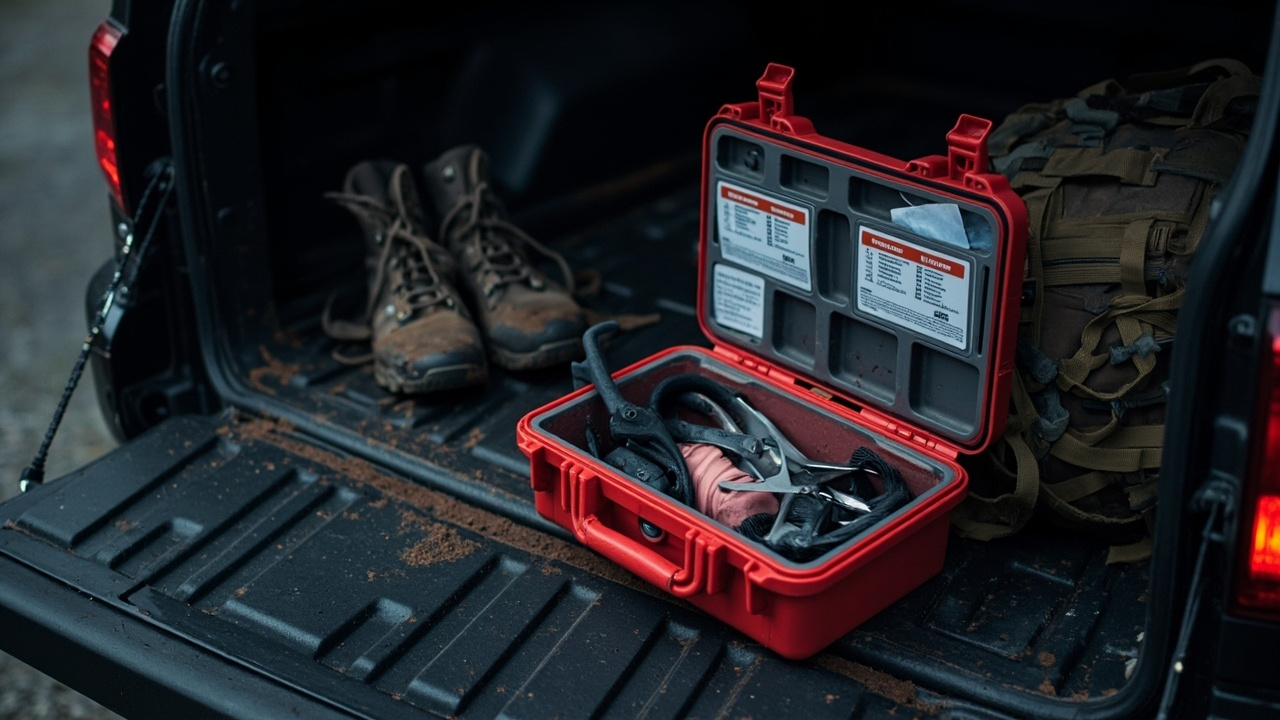
TL;DR: Two separate hands-on test programs completed in September 2026 found that a 150-piece waterproof mini kit measuring 6.4 x 4.9 x 2.7 inches and carrying a tourniquet stayed dry and retrievable after drops, soaking, and glove-on searches.
Two independent tests reached the same waterproof mini-kit finding
Two test teams working separately evaluated popular first-aid kits through physical abuse rather than specification sheets. According to 15 Best First Aid Kit (2026) Top Tested Picks from GuideSpot, one program spent three months hands-on testing 15 of the most popular first aid kits on Amazon across road trips, backcountry hikes, job sites, and weekend family outings. According to Mini First-Aid Kits Every Day Tourer Needs from Distinctive Travels, a second program packed each mini kit into a backpack, a glove compartment, and a car seat pocket and then ran rain, drop, and timed-access challenges.
Both programs centered a 150-piece waterproof mini kit with the same footprint. GuideSpot lists the Vriexsd Mini 150 Piece at 150 pieces with a waterproof hard shell, compact 6.4 x 4.9 x 2.7 in dimensions, and an included tourniquet. Distinctive Travels describes a 150-Piece Waterproof Mini First-Aid Kit at compact 6.4 x 4.9 x 2.7 in dimensions and only 0.73 lb, with 150 essential items including a tourniquet, tweezers, and latex-free gloves.
That overlap matters for a bug-out bag because the same size, count, and tourniquet inclusion passed two different stress protocols in the same month.
How the larger 15-kit program stressed cases and contents
GuideSpot reports that every package was opened and inventoried within 60 seconds of arriving. The team timed how fast it could locate the tourniquet, trauma shears, and a 4x4 gauze pad in three conditions: normal room light, dim flashlight at 3 feet, and complete darkness in a garage.
The program also weighed each kit empty of original packaging. Every hard case was dropped from waist height onto concrete twice. Each waterproof-labeled kit was submerged in a bathtub for five minutes to verify the claim.
Additional field exposure included creek crossings and storage with a car thermometer at 110 degrees with a kit baking in the trunk. The team also timed how fast it could find a tourniquet under flashlight in a dark garage. The stated scoring covered organization and labeling, component quality, case durability, value per piece, and use-case fit.
The guide notes that patterns were pulled from r/preppers, r/CampingGear, and r/onebag to cross-check owner experience. Recurring complaints cited in that cross-check were expired meds on arrival, flimsy case hinges, micro-scissors that do not cut, and misleading waterproof claims. GuideSpot states its September 2026 refresh included refreshed testing notes, current Amazon review counts, and three product swaps since the previous version.
How the mini-kit program tested rain, gravel, and gloved access
Distinctive Travels describes three core challenges applied to each mini kit. The rain-and-mud test involved a 30-minute downpour followed by a muddy campsite walk, then a quick wipe-down with a wet wipe. The drop-and-crush test involved dropping each case from a 3-ft height onto a gravel driveway, then checking for cracked shells or missing items.
The weight-and-access test measured how long it took to locate a specific item while wearing gloves and with cold, sticky fingers. The example target named for that timed search was a tourniquet. The team also logged total weight, dimensions, and how many items survived the soak without clumping.
The program states that all observations were from hands-on use and not a lab spec sheet. Kits were also evaluated after placement in a backpack, a glove compartment, and a car seat pocket. That placement sequence directly mirrors vehicle and on-foot carry used in evacuations.
The 150-piece kit that passed both styles of abuse
GuideSpot places the 150-piece waterproof mini among its top three picks for different needs. The listing identifies it as a budget champion alongside an everyday all-rounder and a professional-grade kit for serious trauma response. The listed attributes are 150 pieces, waterproof hard shell, compact 6.4 x 4.9 x 2.7 in size, and inclusion of a tourniquet.
Distinctive Travels reports tossing the 150-piece kit into a muddy campsite, a hot car trunk, and a tumble onto a concrete driveway. It states that the EVA shell with PU coating stayed dry, the reinforced corners survived the impact, and every item stayed neatly in its silicone-sleeve pocket. The report describes a two-layer waterproof EVA shell with labeled silicone sleeves for instant item identification.
The reported best use is families, hikers, and anyone who wants a compact, waterproof solution that can live in a glove box or backpack. The stated limitations are that it is not a substitute for professional medical gear in severe emergencies and that the one-pack size may feel cramped for larger groups on multi-day trips. Those limits frame where the kit belongs in a loadout rather than replacing larger medical support.
What the companion picks clarify about family and trauma roles
GuideSpot names the First Aid Only 298-Piece kit as the best first aid kit for most families. The reason given is nearly 300 supplies in a soft pouch that slides into a glove box, backpack, or kitchen drawer, supported by 77,000+ reviews proving it holds up over years of real use.
The same top-three table names the Surviveware 184pc Waterproof with 184 pieces, IPX7 waterproof protection, FDA registered status, and labeled compartments. It also names the MyMedic MyFAK PRO with 146 pieces, true IFAK trauma-kit design, tear-away Hypalon construction, and HSA/FSA eligibility. The comparison data adds MOLLE compatibility for the Surviveware selection and a lifetime warranty for the MyMedic selection.
Distinctive Travels adds context on smaller alternatives. The Johnson & Johnson First Aid to Go Portable Mini Travel Kit is listed at 12 pieces, with a plastic shell that stayed intact but with natural rubber latex noted as a potential allergen. Only 12 basic items were included, and the small gauze pads were described as potentially insufficient for deeper cuts.
The Lightning X Mini 20-Piece Waterproof First-Aid Kit was measured at 0.1 lb and 4.75 x 3.75 x 1.5 in, with premium water-resistant nylon and medical-grade shears and ointments. Its listed constraints were only 20 items, no room for expansion, and ointments needing periodic replacement. The General Medi Mini 110-Piece First-Aid Kit was listed at 110 hospital-grade items and 0.35 lb with moisture-resistant material and a certificate of conformity. The Mini 120-Piece Waterproof First-Aid Kit in black and red was listed at 120 internationally certified items, 6.3 x 4.7 x 2.3 in, and 0.62 lb with a waterproof EVA hard-shell case.
What to place in a go-bag after these results
For a vehicle pouch or backpack lid pocket, the shared result points to the 6.4 x 4.9 x 2.7 in 150-piece waterproof format with labeled sleeves and a tourniquet on board. The tested advantage was retrieval under poor conditions: timed searches in darkness, at 3 feet under flashlight, and with gloves and cold, sticky fingers. Organization and labeling was one of the five scoring factors in the larger program, alongside component quality, case durability, value per piece, and use-case fit.
For a household or shelter-bound bag, the 298-piece soft-pouch format supplies the broader count cited for families, while the 184-piece IPX7 waterproof format adds sealed protection with labeled compartments. For a trauma-focused add-on, the 146-piece tear-away Hypalon IFAK supplies the true individual-first-aid-kit role identified in the rankings.
Keep the mini kit stocked as tested: tourniquet, tweezers, and latex-free gloves were the named inclusions for the 150-piece waterproof mini. Check hinge strength, scissor function, medication dates on arrival, and waterproof performance before depending on any kit, because those were the recurring owner complaints weighted heavily in the rankings. Store one copy where both programs stored theirs: backpack, glove box, or car seat pocket.
Sources referenced
- Mini First-Aid Kits Every Day Tourer Needs - Travel & Tourism (https://www.distinctivetravels.com/uncategorized/mini-first-aid-kits-every-day-tourer-needs/)