TL;DR: A passenger power bank caught fire on Lufthansa LH1170 on Sept. 26, 2026, forcing a diversion to Lyon, while U.S. Federal Aviation Administration rules require spare lithium batteries and power banks to fly in the cabin within watt-hour limits.
LH1170 diverted after seat-area power bank fire
Lufthansa flight LH1170 from Frankfurt to Lisbon diverted to Lyon, France, on Saturday evening, Sept. 26, 2026, after a passenger's power bank caught fire near a seat, according to AeroCorner. Lufthansa confirmed the incident to German news agency dpa, which said the aircraft landed safely at around 10 p.m., according to AeroCorner.
The Airbus A321-200 was carrying 198 passengers and six crew, according to dpa and The Aviation Herald as cited by AeroCorner. The aircraft involved was registered D-AISB, according to the Aviation Herald as cited by AeroCorner.
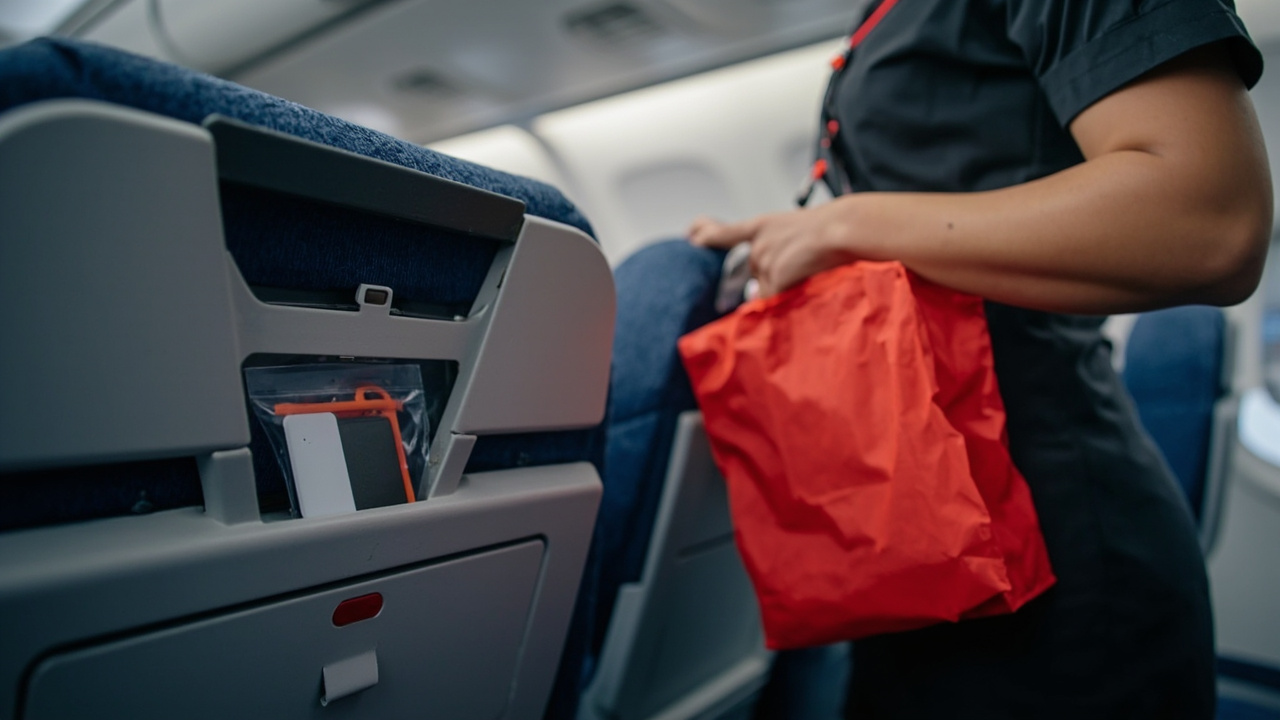
The crew secured the power bank in a lithium battery containment bag, and the flight diverted to Lyon as a precaution, according to AeroCorner. A Lufthansa spokesperson said the crew immediately secured the battery in a protective bag specially designed for lithium batteries, and no-one was injured, according to Malay Mail, citing AFP.
The pilot decided to divert to Lyon as a precaution, and the flight landed without incident, according to Malay Mail, citing AFP. The company said, "The safety of our passengers and crews remains Lufthansa's top priority at all times," according to Malay Mail, citing AFP.
Where the aircraft was and what happened next
The A321 was cruising at 35,000 feet about 70 nautical miles northeast of Lyon when the crew decided to divert, according to AeroCorner, citing the Aviation Herald. The aircraft landed on runway 17L at Lyon Saint-Exupéry Airport about 25 minutes later, according to AeroCorner, citing the Aviation Herald.
Passengers spent the night in hotels in Lyon and were rebooked onto other flights to Lisbon the next day, according to dpa as cited by AeroCorner. Passengers resumed the flight today after an overnight stay in a hotel, according to Malay Mail, citing AFP.
The jet stayed on the ground in Lyon for about 16 hours and then made a positioning flight back to Frankfurt, according to AeroCorner, citing the Aviation Herald. Neither Lufthansa's statement to dpa nor the Aviation Herald report mentions any injuries, according to AeroCorner.
The published accounts do not say what kind of power bank it was, or whether it was in use or charging when it caught fire, according to AeroCorner. The incident first surfaced in reports by RTL and Bild before the airline confirmed it to dpa, according to AeroCorner.
Lufthansa already prohibited using power banks in flight
Since Jan. 15, 2026, power banks may neither be used nor charged on Lufthansa Group flights, according to AeroCorner, citing the group business travel site. The airline has banned the use and charging of external batteries on its aircraft since January, even though passengers are allowed to carry up to two in the cabin, subject to certain safety conditions, according to Malay Mail, citing AFP.
Each passenger may still carry up to two power banks in carry-on baggage, according to AeroCorner. They must stay in the seat pocket, on the passenger's person or in a bag under the seat, and are not allowed in checked baggage or the overhead bins, according to AeroCorner.
A power bank in a seat pocket or under a seat is one the crew can see and reach quickly, which is not true of one inside a closed overhead bin, according to AeroCorner. Cabin access matters because a flight crew can identify and respond to overheating more quickly than it can respond to a fire inside the cargo hold, according to Why Now Daily.
A power bank counts as a spare battery even when the traveler mainly thinks of it as a charger, according to Why Now Daily. The case shows why a ban on use and charging does not take the battery out of the cabin, which is why the rule also says where it must be kept, according to AeroCorner.
Second Lufthansa diversion that Saturday
dpa called LH1170 the second incident that weekend involving a Lufthansa flight from Frankfurt, according to AeroCorner. On the same Saturday, LH470 to Toronto turned back over Scotland and landed at Manchester because of an odor in the cabin, with 371 passengers on board, according to dpa as cited by AeroCorner.
It is not the first power bank fire to turn a European airline flight around since August, according to AeroCorner. On Sept. 17, KLM flight KL735 to Curaçao returned to Amsterdam after a power bank caught fire in business class, and on Aug. 9 a SWISS A330 diverted to Dublin for the same reason, according to AeroCorner.
On Sept. 17, flight KL735 returned to the airport it took off from after five and a half hours in the air due to a small fire caused by a power bank, according to Travel Radar - Aviation News. The KLM Royal Dutch Airlines aircraft was bound for Curaçao from Amsterdam when it made the U-turn over the Atlantic Ocean and headed back to Schiphol Airport, according to Travel Radar - Aviation News.
Why crews still land after bagging a burning battery
Putting a burning battery in a containment bag does not end the risk, according to AeroCorner. The Federal Aviation Administration advisory circular on in-flight fires warns that a fire in one cell of a battery may not yet have spread to the others, but while the device is hot, it still can, according to AeroCorner.
The same guidance tells crews to cool a smoking or overheating device with water or other nonalcoholic liquid, leave it for at least 10 to 15 minutes, then submerge it in a container and monitor it for the rest of the flight, according to AeroCorner. It also warns that a suppressed fire can reestablish itself and grow in a short time, according to AeroCorner.
All lithium-ion batteries are capable of overheating and experiencing a process called thermal runaway, according to the Federal Aviation Administration page titled Airline Passengers and Batteries. Thermal runaway can occur without warning as a result of various factors, including if the battery is damaged, overheated, exposed to water, overcharged, or improperly protected, according to the Federal Aviation Administration page titled Airline Passengers and Batteries.
Thermal runaway can also occur on its own due to manufacturing defects, according to the Federal Aviation Administration page titled Airline Passengers and Batteries. Flight crews are trained to recognize and respond to lithium-ion battery fires in the cabin, according to the Federal Aviation Administration page titled Airline Passengers and Batteries.
Passengers should notify the flight crew immediately if their lithium-ion battery or portable electronic device is overheating, expanding, smoking, or burning, according to the Federal Aviation Administration page titled Airline Passengers and Batteries. During a flight, immediately alert the crew if a device or battery becomes unusually hot, expands, smokes or burns, according to Why Now Daily.
FAA watt-hour limits for U.S. passenger baggage
Passengers can carry most rechargeable batteries and portable electronic devices, such as laptops, cell phones, vaping devices, and mobility aids, for personal use in carry-on baggage, provided they meet the watt hour restrictions, according to the Federal Aviation Administration page titled Airline Passengers and Batteries.
Rechargeable batteries with a capacity of 0-100 Wh are allowed on passenger aircraft, while those with a capacity of 101-160 Wh require approval from the air carrier, and batteries exceeding 160 Wh are forbidden, according to the Federal Aviation Administration page titled Airline Passengers and Batteries. The usual limit for a rechargeable lithium-ion battery is 100 watt-hours per battery, according to Why Now Daily.
For a lithium-metal nonrechargeable battery, the usual limit is two grams of lithium content, according to Why Now Daily. These limits cover most phones, cameras, tablets and ordinary laptop batteries, according to Why Now Daily.
With airline approval, a traveler may carry up to two larger spare lithium-ion batteries rated above 100 and no more than 160 watt-hours, according to Why Now Daily. For lithium-ion rechargeable batteries with a capacity of 101-160 watt-hours per battery, there is a limit of two spare batteries per person, according to the Federal Aviation Administration page titled Airline Passengers and Batteries.
Batteries over 160 watt-hours are generally not allowed on passenger aircraft except under specific provisions such as qualifying mobility devices, according to Why Now Daily. There are no limits for rechargeable batteries under 100 Wh, provided they are for personal use by the passenger, according to the Federal Aviation Administration page titled Airline Passengers and Batteries.
Batteries carried for further sale or distribution, such as vendor samples, are prohibited, according to the Federal Aviation Administration page titled Airline Passengers and Batteries. Many airlines may have stricter quantity and Wh limits on how many spare batteries each passenger is allowed to travel with, regardless of Wh capacity, according to the Federal Aviation Administration page titled Airline Passengers and Batteries.
Carry-on only, checked-bag and protection rules
Spare lithium batteries, including power banks and portable chargers, must be carried on and cannot be checked, according to the Federal Aviation Administration page titled Airline Passengers and Batteries. Federal Aviation Administration guidance requires spare lithium-ion and lithium-metal batteries, power banks, portable rechargers and battery charging cases to travel in carry-on baggage rather than checked baggage, according to Why Now Daily.
Rechargeable lithium battery-powered devices can be checked only if they are completely powered off and protected from accidental activation while still meeting the Wh restrictions, according to the Federal Aviation Administration page titled Airline Passengers and Batteries. A device with its battery installed can sometimes travel in checked baggage, but it must be completely switched off, protected from accidental activation and packed against damage, according to Why Now Daily.
Every spare battery must be protected from damage and short circuit, according to Why Now Daily. Federal Aviation Administration examples include leaving it in retail packaging, covering exposed terminals with tape, using an individual battery case or sleeve, or placing it securely in a separate protective pouch, according to Why Now Daily.
Loose batteries should not share a pocket with coins, keys or other metal objects that could bridge the terminals and create heat, according to Why Now Daily. If cabin baggage is moved to the hold at the gate or planeside, remove all spare batteries and power banks first, according to Why Now Daily.
Damaged, recalled and miscalculated power in a go-bag
Damaged or recalled batteries and battery-powered devices, which are likely to create sparks or generate a dangerous evolution of heat, must not be carried aboard an aircraft unless the damaged or recalled battery has been removed or otherwise made safe, according to the Federal Aviation Administration page titled Airline Passengers and Batteries. Do not travel with a battery or battery-powered device that is swollen, leaking, visibly damaged, subject to a safety recall or likely to spark or generate dangerous heat unless the dangerous battery has been removed or otherwise made safe under applicable instructions, according to Why Now Daily.
The Federal Aviation Administration recommends contacting the specific airline to see if it offers further guidance on transporting damaged or recalled batteries, according to the Federal Aviation Administration page titled Airline Passengers and Batteries. Before travel, find the battery watt-hour rating, inspect it for damage or recall status and check the airline's limits, according to Why Now Daily.
A lithium-ion battery's Wh should be marked on the battery, according to the Federal Aviation Administration page titled Airline Passengers and Batteries. The rating is often printed on the battery; when only voltage and amp-hours are shown, watt-hours equal volts multiplied by amp-hours, according to Why Now Daily.
To determine Wh, multiply the volts by the amp hours, according to the Federal Aviation Administration page titled Airline Passengers and Batteries. As an example, a 12-volt battery rated to 8 Ah is rated at 96 Wh, according to the Federal Aviation Administration page titled Airline Passengers and Batteries. For milliamp hours, divide mAh by 1000 to get to Ah and then multiply by the V, according to the Federal Aviation Administration page titled Airline Passengers and Batteries.
Sources referenced
- Airline Passengers and Batteries - Federal Aviation Administration (https://www.faa.gov/hazmat/packsafe/airline-passengers-and-batteries)
- LH1170 Power Bank Fire Sends Lufthansa to Lyon | AeroCorner (https://aerocorner.com/news/lufthansa-lh1170-power-bank-fire-lyon-diversion/)