TL;DR: The SCOTT Patrol E2 30 Kit earned 4.5 out of 5 after independent cold-weather and touring tests confirmed reliable fan-powered inflation without a gas cartridge.
What did the newest review conclude?
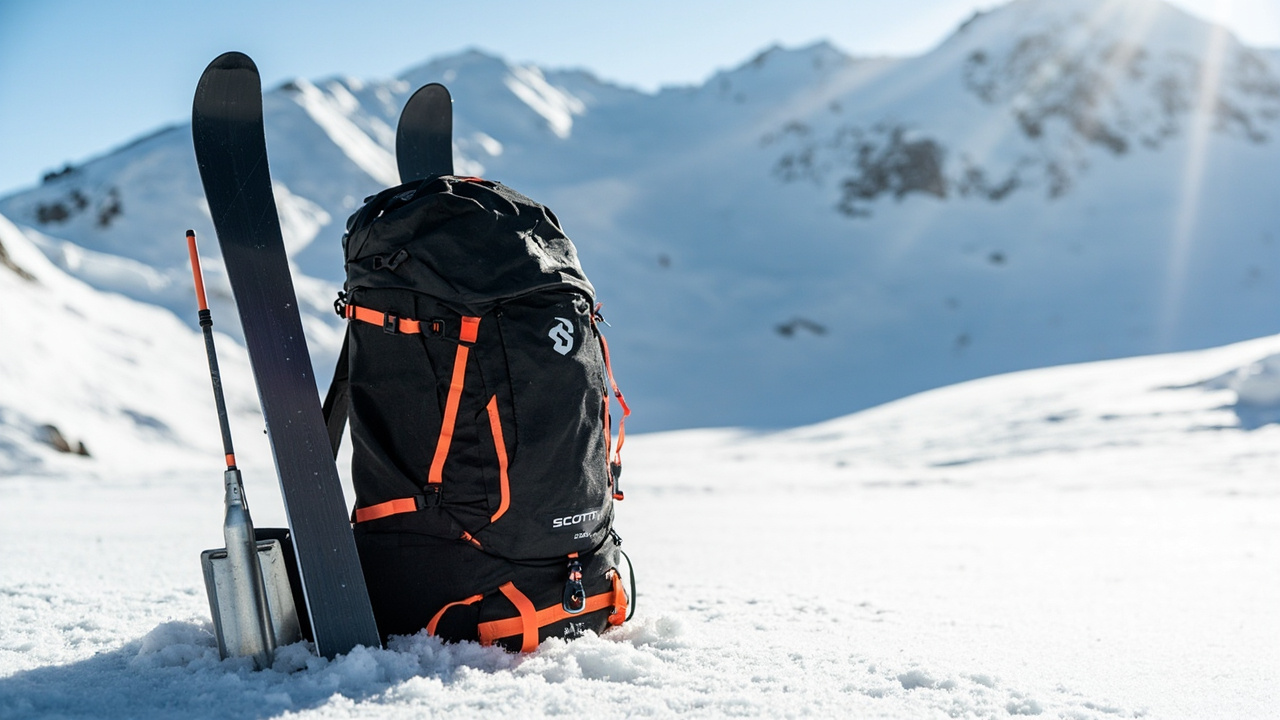
The newest verified finding is the rating published 11 Oct 26 by InTheSnow: 4.5 out of 5 for the SCOTT Patrol E2 30 Kit, presented as Issue 82 coverage, according to InTheSnow's SCOTT Patrol E2 30 Kit Avalanche Airbag Pack Review. The review describes the product as a 30-litre freeride pack combined with an electronic Alpride E2 avalanche system. The central conclusion is that the pack removes cartridge handling while remaining organized enough for daily off-piste use. That verdict draws on separate field evaluations, including cold deployment observation and a touring comparison.
The review frames the purchase as protection the owner hopes never to fully need, which is why daily carry comfort matters. It states the Patrol E2 30 makes a convincing case for regular off-piste skiers. It also states the pack would be welcome on the backs of people skiing off piste regularly. The assessment is positioned alongside training and complete avalanche equipment rather than as a substitute.
What exactly is the Patrol E2 30 Kit?
According to InTheSnow's SCOTT Patrol E2 30 Kit Avalanche Airbag Pack Review, the Kit pairs SCOTT's pack body with the exchangeable Alpride E2 electronic unit. Volume is listed as 30L. Recommended retail price is listed as £980. Weight is listed as approximately 2,720g with the E2 mechanism installed and 1,580g for the pack without the mechanism.
The airbag system is identified as Alpride E2, electronic and exchangeable. Power comes from three supercapacitors recharged by two AA batteries. There is no cartridge. Certification is listed as EN 16716:2017. Availability is listed through SCOTT Sports and specialist UK ski retailers.
The broader category context is explained in the ThirstyBear roundup 9 Best Avalanche Airbag Packs (October 2026) Reviewed. That guide defines an avalanche airbag pack as a backcountry ski or snowboard pack with an integrated inflatable airbag. It explains that deployment holds the wearer closer to the snow surface, reducing the chance of full burial and giving a partner more time to excavate. Activation is by a trigger handle mounted on a shoulder strap, firing either a single-use compressed-air canister or a rechargeable fan that fills a large bag around the head and torso in a few seconds.
How does the supercapacitor system work?
InTheSnow's SCOTT Patrol E2 30 Kit Avalanche Airbag Pack Review explains that conventional designs use a compressed-gas cartridge that must be refilled or replaced following every inflation. The same review explains that cartridge systems can be awkward for travel. By contrast, the Alpride E2 uses three supercapacitors to drive a fan. The supercapacitors are charged by two ordinary AA batteries.
SCOTT is reported as saying cold temperatures do not affect charge or performance. An LCD indicates battery and capacitor status, allowing a readiness check at the trailhead. Because there is no cartridge to replace, a practice inflation does not require purchasing a new cartridge. The review describes pulling the trigger at the start of the season as one of the most useful preparations because the motion becomes instinctive.
The ThirstyBear roundup 9 Best Avalanche Airbag Packs (October 2026) Reviewed gives the same technical distinction in general terms. It defines a compressed-air canister as a carbon cylinder filled at a dive shop, providing one inflation per fill and making practice inflation awkward. It defines a supercapacitor fan as a unit that charges from battery or mains power, spins a small compressor, and can fire repeatedly without a refill. It notes that travelers who fly for snow will find the second category close to a requirement.
What did cold testing show?
InTheSnow's SCOTT Patrol E2 30 Kit Avalanche Airbag Pack Review summarizes independent tester experience with the Alpride E2 mechanism. It reports that PowderGuide's tester observed reliable deployment at minus 20°C. It reports that the same tester said he no longer wants to ski off piste without it. That observation directly addresses the key concern for electronic winter safety gear, namely whether charge and fan function remain dependable in severe cold.
The review also links cold resistance to backcountry practicality. It lists the ability to recharge on the mountain by exchanging AA batteries as a liked feature. It lists cartridge-free, cold-resistant operation among the main advantages. The recharge method means a user can restore power by inserting fresh AA cells during a tour, rather than seeking a refill station.
No additional temperature figures beyond minus 20°C and the general statement about cold are provided in the reporting. The emphasis remains on checking the LCD readout before departure and maintaining the AA supply as part of the winter kit.
What did the touring comparison find?
InTheSnow's SCOTT Patrol E2 30 Kit Avalanche Airbag Pack Review reports that OutdoorGearLab selected the Patrol E2 30 as its Best for Touring choice. It reports praise for relatively light construction for an airbag pack. It reports praise for a rescue pocket that accommodates a large shovel blade and a 300cm probe. It reports praise for the most secure diagonal ski carry in that test.
Those details connect directly to loadout planning. A rescue pocket that accepts a full-size blade and a 300cm probe means the core digging and searching tools can remain together in one dedicated space. A secure diagonal carry affects transitions, because skis must stay stable during bootpacks and ridge walks. Light weight for the category affects willingness to carry the system every day, which the review identifies as essential for off-piste safety.
The review also notes the E2 unit can be transferred between compatible SCOTT packs. That exchangeability allows a different pack size for different days while retaining the same inflation mechanism. The back system is identified as bSPINE EVO, offered from size SL to NL. Shoulder weight distribution is described as aiding comfort on longer bootpacks.
How is rescue gear organized?
According to InTheSnow's SCOTT Patrol E2 30 Kit Avalanche Airbag Pack Review, avalanche tools have a dedicated compartment with organizer pockets. An external pocket provides quick access when seconds matter. That separation keeps shovel and probe isolated from clothing, food, and spare layers in the main 30L volume.
The pack body uses CORDURA construction, identified as tough and intended for large backcountry days. Carry options include diagonal ski carry, snowboard and snowshoe carry, helmet carry, and ice axe and pole fixings. That range covers freeride and ski-touring configurations, plus mountaineering tools for mixed routes.
The ThirstyBear roundup 9 Best Avalanche Airbag Packs (October 2026) Reviewed stresses why separation and speed matter. It states most avalanche fatalities involve burial. It describes a window of roughly fifteen minutes, after which exhaled carbon dioxide accumulates, oxygen falls, and an ice mask can form over the airway inside a snow cavity. It describes the airbag as one layer on top of a transceiver, probe, shovel, a partner able to dig, and terrain decisions made before the slide.
What are the weight and space trade-offs?
Weight with the system fitted is around 2.7kg, which the review describes as not light but in line with electronic airbags. Weight without the system is 1,580g, showing the added mass of the inflation unit. For loadout decisions, the difference means food, water, and spare insulation must be balanced against the safety mechanism within the 30L envelope.
The review reports practical drawbacks found by testers. The hip belt is described as fiddly to adjust and requiring two hands. The large safety compartment is described as reducing packing space. The price is described as not cheap at £980. The system is located at the bottom of the pack, so the review advises switching it on in the car park rather than partway up the skin track.
Those points shape trailhead routine. Powering on at the vehicle avoids removing the pack and reaching the lower compartment during an ascent. Practicing belt adjustment with gloves before a tour reduces delay at transitions. Packing the main compartment around the fixed safety volume prevents overfilling.
What still belongs in the loadout?
InTheSnow's SCOTT Patrol E2 30 Kit Avalanche Airbag Pack Review states an airbag never replaces training, a transceiver, shovel and probe. It advises freeriders and ski tourers who regularly enter avalanche terrain and want one dependable pack for long days to consider the model. It advises piste skiers who make only occasional short detours to begin with training and core avalanche equipment first.
The airbag is described as helping keep a user near the surface. A transceiver, shovel and probe remain required, along with the training to use them and a partner carrying the same. The ThirstyBear roundup 9 Best Avalanche Airbag Packs (October 2026) Reviewed reinforces that limit, quoting owners on r/Backcountry who describe the airbag as a last resort rather than justification for skiing harder terrain.
Travel planning also remains the owner's responsibility. The review notes less to arrange when flying without a cartridge, while directing owners to confirm airline rules on avalanche airbags before travel. Checking the LCD for battery and capacitor status is presented as the trailhead confirmation step.
Loadout consequence
For a practical winter loadout, the reporting points to a 30L, 2,720g system that keeps full-size rescue tools in a separate rapid-access space while accepting skis, board, snowshoes, helmet, axe and poles. Spare AA batteries belong with repair and first-aid items because they restore inflation power. The main compartment must be packed light enough to respect the space taken by the safety section and bottom-mounted unit.
Sources referenced
- SCOTT Patrol E2 30 Kit Avalanche Airbag Pack Review - InTheSnow (https://www.inthesnow.com/gear/scott-patrol-e2-30-kit-avalanche-airbag-review/)